


 SIGN UP FOR OUR

By Wendy Anders
A tech researcher for IOActive, a security research firm, decided to play around on an in-flight screen to see if his investigative skills could detect any weak links in the computer systems.
Well it turns out the systems do appear to be vulnerable, according to IOActive, who communicated their findings to Panasonic, one of the major creators of in-flight entertainment systems, over a year ago.
It seems that someone with the knowhow and enough malicious intent could mess with the information provided to passengers on their touch screens, and could possible also obtain credit car and/or frequent flier information through the electronic systems onboard, said IOActive.
The systems that appear to be vulnerable to tampering are used on the following airlines: Emirates, AirFrance, Aerolineas Argentinas, United, Virgin, Singapore, FinnAir, Iberia, Etihad, Qatar, KLM, American Airlines, and Scandinavian, said IOActive.
American Airlines and United Airlines told ABC News that “they take security risk seriously and are working with tech experts to ensure passenger safety.”
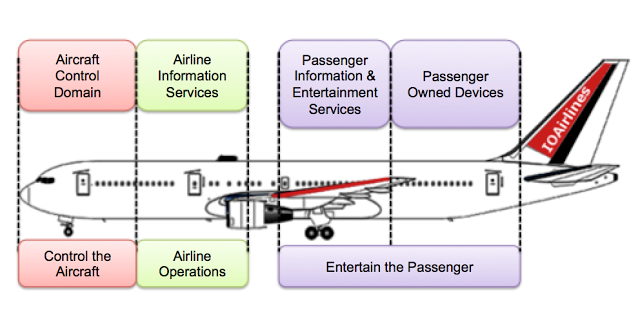
IOActive’s report suggested that, “skilled malicious hackers gaining access to the planes avionic controls,” via certain vulnerable in-flight entertainment systems.
Amid the accusations by IOActive, Panasonic has refuted many of the claims saying, “Panasonic strenuously disagrees with any suggestion by IOActive that such an attack is possible, and calls upon IOActive to clarify that its research does not support any such inference.”
“On the bright side,” said IOActive’s researcher, “while not in scope of the Panasonic Avionics IFE systems research, I believe in-flight Wi-Fi itself is not a problem because it can be implemented securely without safety and security risks.”
“Airlines must be vigilant when it comes to their In-Flight Entertainment Systems, ensuring that these and other systems are properly segregated and each aircraft’s security posture is carefully analyzed case by case,” concluded IOActive.



