


 SIGN UP FOR OUR
  By Jack Donnelly
Mexico and Central America gained their independence from Spain on September 15, 1821. The news did not reach Costa Rica until October 11th, but Independence Day is still celebrated here on September 15th. Actually, there is a small movement to change the date, but the 15th is still the official holiday.
It took some time for the Central American countries to sort out their governments, borders, and so forth. During the colonial era, the District of Nicoya, el Partido de Nicoya (partido can mean an administrative district—it is commonly mistranslated), was a separate entity. It had been the first part of Costa Rica conquered and controlled by the Spanish and remained independent from the neighboring colonies of Costa Rica and Nicaragua. There is a common misconception it was formerly a part of Nicaragua. This was never the case. Ironically, colonial Costa Rica had more involvement with Nicaragua than the Partido. Nicoya reported directly to the Captaincy General of Guatemala, the Spanish regional administrative center. Costa Rica had to send its reports via León, Nicaragua.
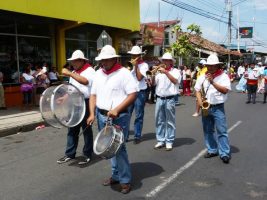
Photo: Jack Donnelly
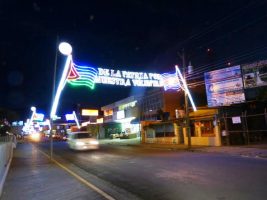
On July 25th, 1824, the Partido elected to join with Costa Rica. This is known as The Annexation, la Anexión. It is celebrated every year as a national holiday. In San José there are celebrations of the traditional foods, dance, and folklore of Guanacaste. In Guanacaste there are many civic activities. The President and other politicians visit to make speeches. Streets are decorated with the slogan, “De La Patria Por Nuestra Voluntad.” This means Costa Rican by our choice and is on the coat of arms of Nicoya. There are even big Christmas-like lights with this slogan arching over the main streets.
At the time of independence, the Partido consisted of all of modern-day Guanacaste, minus the townships of Bagaces and Cañas, which were part of Costa Rica. It also included the townships of Lepanto, Paquera, Cóbano, and some islands in the Gulf of Nicoya, which were assigned to the Province of Puntarenas by presidential decree in 1915. This was purportedly done due to the difficulty of travel between the upper and lower regions of the Nicoya Peninsula. It was easier to access these places by sea from Puntarenas. However, it remains a sore point in Guanacaste, and there are both court and legislative efforts underway to either rescind this decree or at least hold a referendum. During the Annexation celebrations in Guanacaste, you will see protest signs addressing this controversy.
About the Author
Jack Donnelly
Jack Donnelly has been a life-long enthusiast of Latin American folk culture. As a young man, during the 1960s, he studied cultural anthropology at the Universidad de las Américas in Mexico City. He went on to volunteer with the U. S. Peace Corps in Guatemala.
Now, Donnelly lives in Heredia, Costa Rica. He travels around the country investigating and documenting folkloric events. Donnelly is the author of COSTA RICA: Folk Culture, Traditions, and Cuisine which is available on Amazon in paperback and Kindle.




