


 SIGN UP FOR OUR
 By Wendy Anders
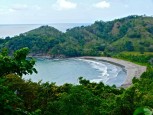
Nicoya beach, Guanacaste. Flickr Commons
Ontario, Canada’s University of Windsor has a new dean of science who studies beaches around the world, and their deceptively strong rip tides.
Whether it’s dangerous rip tides or currents in Costa Rica or beaches along the Great Lakes, Houser encounters the same problem. Swimmers don’t know how to spot a rip current.
When your brain is in vacation mode you assume a beach with a hotel must be safe or because you’ve never heard of anyone drowning at a local beach you enter the water without considering the conditions, he said.
“We can all think of what an earthquake is going to be like. We all know what a tornado is going to be like. It’s much more difficult for somebody to perceive what would it be like to be caught in a rip current,” Houser said. “It’s such a foreign concept.”
Rip currents are narrow channels of fast-moving water that quickly draw swimmers away from shore. People see waves breaking at a beach and assume that’s the most dangerous area to swim and will pick what looks like a relatively calm area between waves. That is the rip current, he said, and people drown as they panic.
Dean Chris Houser hopes the information on how to detect a possible rip current and stay alive in one, can make a difference. Most importantly, lifeguards can be the difference between life and death for ocean-goers.
A rip current can flow as fast as 2.8 meters/second. Olympic swimmer Michael Phelps briefly swam at 2.1 meters/second at the London Olympic Games, and “not even he would be able to fight that current,” Houser said.
At least fifty people a year drown in Costa Rica because of rip currents. Up until recently Costa Rica didn’t have a lifeguard program. It’s now working on training lifeguards and putting up warning signs at popular beaches because of Houser’s research. He works with the United States Embassy, the National University of Costa Rica and the Red Cross.
Houser, an earth and environmental sciences professor who came to Windsor in July from Texas A&M, will take a team of undergraduate students to Costa Rica in the spring for more research.



