


 SIGN UP FOR OUR
 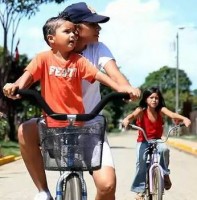 The misty city of Cartago may have the unluckiest football team in Costa Rica, but two announcements this month are making residents feel fortunate.
The former capital of the Republic is bound to become one of the cleanest and greenest in terms of transportation options. According to an official press release from the Executive branch, the new train service between Cartago and San Jose may begin running in October. The other announcement was published by journalist Roberto Portuguez from La Prensa Libre, and was celebrated by a caravan bicycle ride through the city: Construction of a new urban bike loop should be completed by the end of the year.
The two projects will advance Cartago a few notches in achieving Costa Rica’s goal to become a carbon-neutral nation by the year 2021.
Train Service will Alleviate Traffic Congestion
The busy Florencio del Castillo Highway is named after a man of the cloth who was born and raised in Ujarra and would become one of Costa Rica’s favorite sons thanks to his masterful handling of diplomatic affairs, refined intellect and desire to advance the rights of the indigenous and Afro-Caribbeans in our country.
Although drivers on the Florencio del Castillo Highway enjoy four wide lanes in some stretches, the population growth and the Ticos’ affinity for automobiles often result in gridlock and legendary traffic jams that recall the days of “La Platina” bridge over the Virilla River going towards Alajuela.
Vice President Luis Liberman and Miguel Carabaguiaz, President of the Train Institute of Costa Rica (INCOFER in Spanish), inspected the eastbound tracks along Curridabat and Tres Rios on Thursday, May 10th. The Vice President hopes that, if everything runs as planned, President Laura Chinchilla will make the first trip on the eve of our Independence Day, on September 14th. Regular scheduled service would begin a couple of weeks later.
Exclusive Bike Lane and Urban Loop
This project will cost about $100,000 and will promote fitness while at the same time reducing carbon emissions. Agricultural and ecosystems expert Don Alexander Bonilla Duran recently commented that Ticos could do a lot to reduce their carbon footprint by losing weight, and thus the Cartago bike lane will be a welcome addition in Costa Rica.
The route will start at the Polideportivo (Sports Complex) and will continue on to the municipality, the Fello Meza Stadium, the Technology Institute of Costa Rica (TEC), the Vicente Lachner School, the Basilica of Our Lady of the Angels, the train station, the museum, the central market, Independence Plaza, the University College of Cartago, and finally back to the Polideportivo.
This project is funded by the Municipality of Cartago and the Costa Rica Auto Club.



