


 SIGN UP FOR OUR

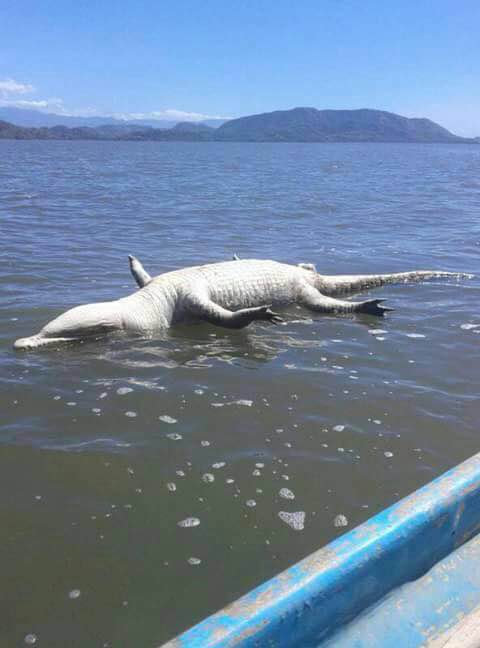
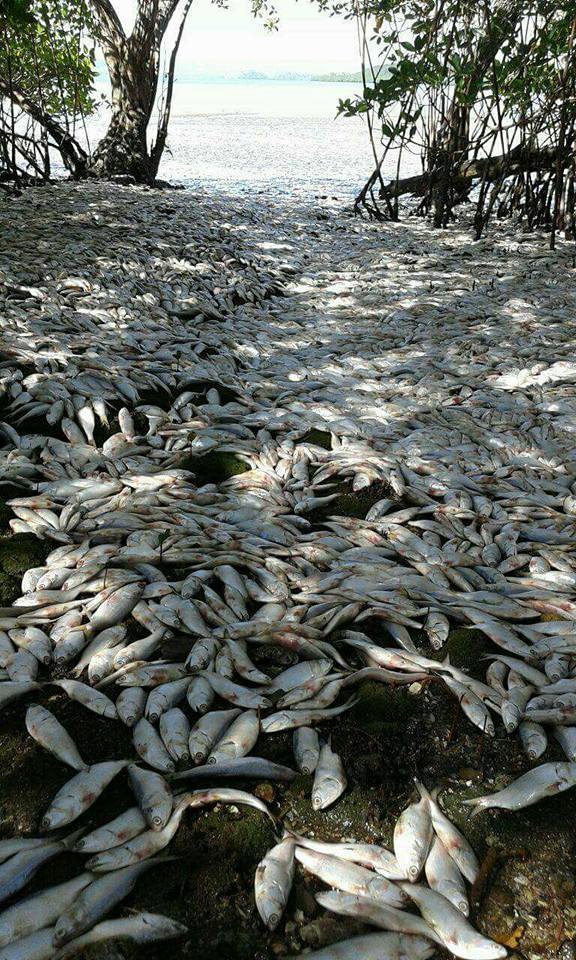
This Friday a group of fishermen found the dead body of an alligator close to the area where thousands of dead fish washed ashore just this past Wednesday.
The reptile was found in the Moraga estuary, just 700 meters from the place where sardines were found in the Nicoya Gulf.
According to a neighbor of Manzanillo, Puntarenas, finding alligators and crocodiles in the area is not uncommon but it is very odd that they turn up dead.
Aside from the sardines and the seabass, other fish species have turned up dead since Wednesday.
Collaborators of the Costa Rica Fishing and Aquaculture Institute and the National Animal Health Service were working in the area to take samples of the reptile and other fish for the necessary analysis.
Although the strongest hypothesis at this point had been that a type of seaweed could have caused low levels of oxygen,the marine biology station of the National University (UNA) has ruled out this possibility. The laboratory analysis done did not find trace of phytoplankton. Now they are focused on analyzing samples to evaluate other hypothesis such as the contamination of the water.
Neighbors of the area are concerned about the possibility that something or someone may have poisoned the water of the Nicoya Gulf.
Gustavo Meneses, Executive President of the Costa Rica Fishing and Aquaculture Institute asked the population not to be alarmed and to await information from official authorities.
The different institutions have also requested to temporarily stop the fishing activities as well as selling of fish from the areas of Abangaritos and Manzanillo in Puntarenas as a precaution; they also urged locals and visitors not to bathe in the near-by beaches.
“We believe this is an isolated situation, but we have to take precautionary measures until we have the tests results”, explained Daniel Salas, Health Protection chief.
The National University is analyzing the water samples while the National Animal Health Service (SENASA) is analyzing the different animal samples collected.



