


 SIGN UP FOR OUR
 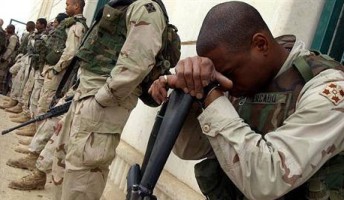 For many decades, hundreds of military veterans from the United States have made Costa Rica their second home, and many of them have experienced the horrors of war. In Costa Rica, they hope to start a new life and alleviate their traumatic combat experience; this is a primary goal that they hope to accomplish even if they do not intend to live out the rest of their lives in our country.
Costa Rica is a choice destination for U.S. veterans; this much was explained by retired U.S. Army medic John Sutherland, who lives in Grecia, a few years ago in an article published by MilitaryLiving.com:
Motives for relocation amongst most [U.S.] expats [and veterans] I know were primarily economic. Many were living solely on social security. Those who receive supplemental retirement income tended to be in a better financial position to contend with unforeseen difficulties. Most of the men relocating to Costa Rica were divorced, widowed or single. Some were open to the possibility being able to start a new relationship, even at this stage of their lives.
Some U.S. combat veterans see Costa Rica as a therapeutic destination to deal with their post-traumatic conditions. A recent article by Lucy Luginbill of the Tri-City Herald, a newspaper serving Washington State, tells the story of James, a veteran of the U.S. Marine Corps, who had an enlightening life experience while visiting Costa Rica. James was an infantryman who saw combat in Iraq; he returned home after the end of his enlistment and spent four months in a haze of heavy marijuana use:
Dark thoughts pressed in upon him, crushing promise like the heel of a boot. For the former Marine, it felt as if he didn’t have a prayer.
“It was very ugly […] I battled suicidal thoughts every day. I thought, ‘What’s the point of life?’ ”
“I wanted to prove that I didn’t need to be high to be happy. But now my mind was clear and this dark cloud began to settle,” James said as he remembered how he felt while [working as a ranch hand].
When his brother suggested Costa Rica to surf and stay with relatives, James sold his truck for travel money.
“I spent two weeks living on the beach, surfing with my brother and his friend in paradise, but it didn’t do anything for me,” James said.
Solace finally came for James in the form of prayer and a scary encounter with a snake in a jungle patch he had picked for meditation while in Costa Rica. While shifting from genuflection to a standing adoration position, he spotted the snake in a threatening pose, getting ready to strike; luckily, James had enough time to react and quickly move away. That happened in 2008, and James took it as a sign of God’s protection; his life has improved considerably since his visit to Costa Rica.
Costa Rica was going to be salvation for Nicholas Cutter, a former U.S. Army soldier who spent 15 months in Iraq and saw heavy combat. Mr. Cutter suffered from post-traumatic stress and survivor’s guilt; many of his fellow soldiers were either killed in action or else suffered horrific injuries that left them disabled, maimed and disfigured.
In an investigative article published in the Miami New Times last year, journalist Michael E. Miller explained that Mr. Cutter started using cocaine upon his return to his home in South Florida. He then became very depressed and developed an addiction to the medications prescribed to him by physicians from the U.S. Veterans Administration (VA); in fact, he ended up in a rehabilitation ward at the Miami VA Hospital, where he met Phillip Nall, a former Marine and a veteran of the U.S. invasion of Panama.
Like Mr. Cutter, Mr. Nall had battled post-traumatic stress, depression and drug addiction. The two war veterans became best friends and made plans to move to Costa Rica after rehab; Mr. Cutter passed away from a heroin and cocaine overdose while at the Miami VA Hospital. Michael E. Miller explains:
Philip Nall lounged on a pristine beach in Costa Rica and dialed his best friend’s number. When Nick didn’t answer, Nall texted [Mr. Cutter’s mother, Mary]. An hour later, his phone rang. All Mary could say before choking up was, “Nick is dead.”
The tragedy would devastate Phil and Mary, sending each into depression.
Nall had flown to Costa Rica to continue his rehab, but the Central American paradise became his personal drug den after he learned of Nick’s death. He spent the remainder of his money on as much booze and cocaine as he could ingest. He would have been stranded there, at rock bottom, had Mary not paid for him to fly back to South Florida.
The rehabilitation of Mr. Cutter and Mr. Nall in Costa Rica could have included ibogaine therapy. Writing for Veterans Today, Dr. Stuart Jeanne Bramhall wrote an article about this treatment for U.S. war veterans:
Why are we sending vets to Costa Rica (and Canada and Mexico)?
Sixty years of research has demonstrated ibogaine’s effectiveness in opiate, cocaine, amphetamine, nicotine and alcohol dependency, as well as treatment resistant post traumatic stress disorder (PTSD). Yet owing to the ludicrous and ineffectual “War on Drugs,” ibogaine remains illegal in the US.
It’s an issue of special relevance to veterans, who suffer a high rate of combat-related post traumatic stress disorder (PTSD) and addiction disorders. Twenty percent of Iraq and Afghanistan veterans develop PTSD or depression, with 22 a day, on average, committing suicide. Veterans wounded in Middle East conflicts have a 25-35% chance of becoming addicted to prescription opiates.
Costa Rica has a history of welcoming U.S. war veterans and establishing good relations with them. As recently reported in The Costa Rica Star, these relations include advocacy for veteran’s families from a Tico anti-war activist:
The newly created Arredondo Family Foundation seeks to provide a helping hand to those experiencing a tragedy and to provide education on matters relating to veterans and their families, particularly the issue of suicide. Costa Rican founder Carlos Arredondo, the “hero with a cowboy hat” of the 2013 Boston Marathon terrorist attack, is the grieving father of Lance Corporal Alexander Scott Arredondo of the U.S. Marine Corps, who was killed in action in Baghdad.
Like the late Alexander Arredondo, a few Costa Rican citizens have served in the U.S. Armed Forces and experienced combat. Such is the case of former U.S. Army Staff Sergeant Melvin Salas, who was unceremoniously deported by the United States despite being a veteran of the first Persian Gulf War. These days, Mr. Salas is helping fellow U.S. war veterans who have also been deported. In 2010, Arlene M. Roberts, an attorney from the U.S., wrote about this issue for the Huffington Post:
There is no greater sacrifice than putting your life on the line for your country – even when it’s your adopted homeland. So why are there so many non-citizen war veterans being deported after giving years of service in multiple wars?
Citizenship is not a prerequisite for military service, and there is little distinction as legal permanent residents (green card holders) engage in combat alongside citizens. Upon re-entry into the United States, legal permanent residents follow the same procedures as citizens, and are not inspected by immigration officials. But according to Banished Veterans, there are approximately 2,000 to 3,000 non-citizen veterans facing deportation.
The Banished Veterans organization that Mr. Salas serves seeks to stop U.S. veteran deportations through the legal doctrine of non-citizen nationals, which could be construed so that immigrants serving in the U.S. Armed Forces during wartime should be treated as U.S. nationals.



