


 SIGN UP FOR OUR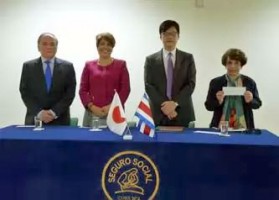
Source: Embassy of Japan in Costa Rica
Under the direction of Ambassador Mamoru Shinohara, the Embassy of Japan in Costa Rica has been very active over the last few months. One of the Embassy’s latest contributions strikes the heart of the social fabric in Costa Rica. On Tuesday, February 18th, Ambassador Shinohara signed a funding commitment of $87,928 to the Remodeling and Expansion of the National Geriatric and Gerontological Hospital Dr. Raul Blanco Cervantes.
The monetary donation by Japan is part of that nation’s program of Assistance to Community and Social Security Projects, which provides direct funding grants to groups dedicated to human development projects. In this case, the Embassy of Japan is benefiting the internal association dedicated to improvement of the Dr. Raul Blanco Cervantes Hospital, which is part of Costa Rica’s public health care system known as La Caja.
Among the assets that will be obtained with the donation, three new vehicles will be assigned to the hospital, which is located in San Jose: One vehicle for the Community Elder Care Unit, one for Terminal Care and Hospice Operations, and another for the Elder Home Care Program.
Both Costa Rica and Japan are dealing with significant increases of their elderly population. This was something that Ambassador Shinohara addressed during the commitment ceremony:
Costa Rica, like Japan, is an aging society. For this reason, the Embassy of Japan decided to collaborate in this project that includes these three vehicles, so that the Blanco Cervantes Hospital can improve medical care both in its main facility and at the homes of more than a hundred thousand senior citizens in need of medical care in the metro area.
Respect and honor for the elderly is a known Japanese tradition. According to Amy Chavez of Planet Tokyo:
The third Monday of September is Respect for the Aged Day, a national holiday in Japan. Japanese people traditionally wear red on their 60th birthday because 60 years is one cycle on the Chinese calendar and after 60, it is said that you become a baby again. Babies in Japan are called “aka-chan” or “red one.”
Neighborhoods will have volunteers distribute free “obento” boxed lunches to elderly people in the neighborhood and smaller villages will hold keirokai shows where the younger people and school children prepare dances and songs for a special keirokai ceremony. The elderly attendees are also treated to lunch, tea, and sweets after the performance.
The Costa Rica Star has been covering the good diplomatic spirit shown by Japan in recent months:
- Domo Arigato: Japan Helps Costa Rica With School Remodeling
- Japan’s Rural Development Model Takes Hold in Guanacaste
- Domo Arigato: Substantial Japanese Donation to Costa Rica
- Japan Will Help Guanacaste With Clean Energy Technology



