


 SIGN UP FOR OUR
 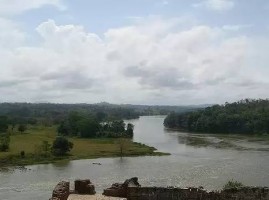 While President Laura Chinchilla visits political and business leaders in Europe, the Executive branch of Costa Rica has issued an official announcement regarding its position on the controversial construction of route 1856, the Juan Rafael Mora Porras highway that runs parallel to the San Juan river on the border with Nicaragua.
In a matter of just a few weeks, the highway project has been transformed from a matter of national pride into a thorn in the current administration’s side. What started as a statement of sovereignty against many incursions by Nicaragua into Costa Rica -particularly the notorious Google Maps invasion– is now a mess of corruption, inefficiency, impulsiveness, and environmental damage.
An article by journalist Carlos Villalobos published in the leading newspaper La Nacion contains an interview with President Laura Chinchilla that took place in Paris on Thursday night. In that interview, our President admitted that the highway project was a rush job. She did not go into technical details, but she recognized that the 160-kilometer highway got started without blueprints.
President Chinchilla explained that the decision to begin the project, without the proper engineering and environmental consultation that usually takes place with endeavors of such magnitude, was due to an emergency. She mentioned the airport that Nicaragua is building in their southern zone and the increased development that they have undertaken in the region. Route 1856, according to our President, is the answer to that development and increased presence.
The entities assigned responsibility for the project are the National Highway Council (CONAVI in Spanish) and the Ministry of the Environment (MINAE). It was the latter government agency that rejected a request by the National Council on Emergencies (CNE) to evaluate the environmental damage caused by heavy machinery that cleared a path through forest and swamplands. After a year and a half of road construction, the MINAE admitted that primary forests were cut down and swamps reduced, with the inevitable effect of dirt sliding down to bodies of water.
A project of the magnitude of route 1856 can be expected to bring about environmental impact, but the government of Costa Rica did not assess it because of Executive decree 36.440 of March 27, 2011 -according to La Nacion. That decree in essence precluded environmental impact studies on the road construction. Civil organizations in Nicaragua have filed suit against Costa Rica before the Central American Court of Justice over claims about environmental damage caused to the San Juan river. While that specific claim has yet to be proved by concrete evidence, the confirmed damage to Costa Rica seems to bolster their case.
A Matter of Sovereign Defense
The government of Costa Rica has issued a 12 point positioning statement on the matter. The statement makes reference to the military invasions by Nicaragua and the need for a highway on which Fuerza Publica can quickly react to invasions. During the Google Maps invasion, for example, it took a long time for Fuerza Publica to be deployed to Isla Calero by boat. There is a reason for the lack of roads, river docks and helicopter landing pads in the area: most of the insular island is a nature preserve.
Another point made by the administration of President Laura Chinchilla is that while the Google Maps invasion consisted of a few infantry squads commanded by the aging former revolutionary Eden Pastora, a greater invading force would call for the quick evacuation of the residents of Isla Calero, and thus a road was needed in haste. The government cites national and international law in this regard, as well as resolutions issued by the United Nations.
The government recognizes and justifies the actions that lead to environmental damage in the region, and they are committed to restoration to take place simultaneously with completion of the highway project. With regard to the inefficiency and corruption that has tarnished the project, the government points out that it was the observation and investigation by public officials that led to the discovery of these irregularities, and to that extent they will be dealt with in a judicial fashion.
Meanwhile, the press in Nicaragua is dedicating considerable space to the matter. La Prensa has published headlines such as “Tico Sediments in the San Juan River“, while El Nuevo Diario concentrates on the almost unlikely fact that in the 21st century a 160 km highway project could begin without blueprints.



