


 SIGN UP FOR OUR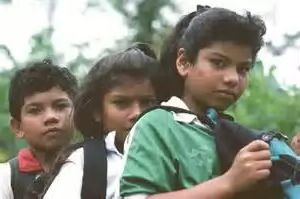
Bribri schoolchildren in Costa Rica
Earlier this month, a trailing presidential candidate in Costa Rica received a very special honor. Rodolfo Piza, leader of the battered Social Christian Union political party (Spanish initials: PUSC), welcomed representatives of three indigenous communities from the Southern Zone, who traveled to San Jose to meet the candidate they consider is the only one looking out for their interests.
None of the other presidential candidates in Costa Rica have received such an uplifting display of political support from the indigenous. Representatives from the Bribri, Cabecar and Terraba communities arrived with a banner that displayed: “Piza actually listens to the indigenous.”
The candidate was visibly moved. He mentioned that this show of political allegiance has been the most important of his campaign, and he showed heartfelt gratitude to his indigenous representatives. Candidate Piza also mentioned that Costa Rica should be paying attention to the issues that affect all people all across the country.
Political empowerment of the indigenous in Costa Rica is a 21st century development. In the past, indigenous people in Costa Rica often left their land and communities to seek work in San Jose. Over the last two decades, however, indigenous communities such as the Yorkin Bribri of Talamanca have chosen to stay in their land and become empowered therein.
The Yorkin Bribri community was recently highlighted in a report by renowned Australian travel writer Michael Turtle, who was invited to visit Talamanca by the Tourism Board of Costa Rica (Spanish acronym: ICT). Mr. Turtle interviewed Cesar, a Bribri who no longer wishes to travel to the Central Valley to look for work:
Cesar is 30 years old and was just 11 when his mother came up with the idea to allow tourists to visit their community, here in the Yorkin Indigenous Reserve. They started it together and over the years it has developed and grown. With the project, they allow in a small number of visitors each day to experience life in the community. 40 families take it in turns to host the tourists, cook them meals and talk about their culture.
By developing their own communities and sticking together in their political choices, the indigenous in Costa Rica are showing the rest of the country that they are a vital part of the democratic process.



