


 SIGN UP FOR OUR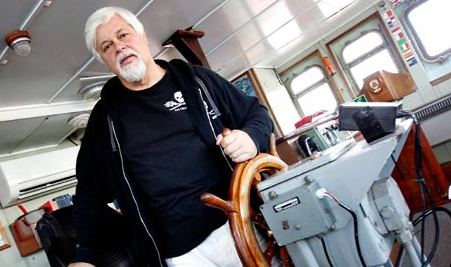
The Japanese government has confirmed that it asked Germany to arrest and extradite Sea Shepherd founder Paul Watson just days before the environmental activist jumped bail and fled the country.
The Japanese Embassy in Berlin said Friday in a statement that it submitted documents July 19 to the German Foreign Ministry in “which the Japan Coast Guard requested the detention of Paul Watson with the aim of extraditing him to Japan.”
In a complex legal odyssey spanning the globe, Costa Rica has filed its own extradition request against Watson on charges stemming from a high seas confrontation between a Sea Shepherd vessel and a Costa Rican ship over alleged illegal shark finning in 2002. That warrant led to Watson’s arrest in Germany.
Watson, a Canadian national, was accused of “putting a (Costa Rican) ship’s crew in danger.” But he could face more serious charges in Japan, as the Sea Shepherd Conservation Society has long carried out aggressive attacks on the country’s whaling fleet.
The 61-year-old was arrested at Frankfurt airport in May and detained for a week, before being released on €250,000 bail (about ¥24.2 million) and ordered to appear before police twice a day.
However, a Frankfurt court this week reported that Watson skipped bail July 22 and quoted his lawyer as saying that he had left Germany “for an unspecified destination.” It then reissued an arrest warrant for him.
Sea Shepherd suggested Thursday that Watson fled Germany as he feared Japan would seek his extradition if he were sent to Costa Rica. The group claimed to have no idea of his whereabouts.
The Japanese Embassy said in its statement Friday that it had no involvement with the Central American country’s legal proceedings against Watson.
“The extradition request from Costa Rica is a matter that only concerns Germany and Costa Rica,” it said. “Japan is unable to comment.”
Watson, who was tweeting as recently as Tuesday but made no mention of his location or future plans, has previously suggested that Japan was “putting pressure” on Germany to extradite him.
Sea Shepherd is best known for its annual pursuit of the Japanese whaling fleet during its Antarctic Ocean hunts and its militant methods to halt the whalers’ vessels, including boarding ships.
After setting off from Australia this year, the group hurled stink bombs at whaling ships and used ropes to try to tangle their propellers in a series of clashes that saw the fleet retaliate with water cannon. The disruption limited the number of whales culled to less than a third of the fleet’s target.
Source: Japan Times



