


 SIGN UP FOR OUR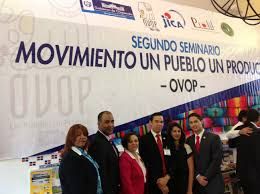
An OVOP conference at the Dominican Republic.
Strengthening a community’s brand, adding value to existing products and conducting frequent market research are business principles that some small towns in Guanacaste are experimenting with. They are part of the “One Village, One Product” (OVOP) movement promoted by the Japanese International Cooperation Agency (JICA). The OVOP movement has been successful in Europe and Latin America, and it may have a similar effect in Costa Rica.
The Nicoya Peninsula of Guanacaste is the first region of Costa Rica to implement the OVOP principles. According to regional newspaper Guanacaste a la Altura, OVOP was welcomed into the region by Tania Lopez Lee, Minister of Agriculture. Japanese OVOP consultants and cantonal administration officials from Nicoya believe that the program can empower many of the small town industries currently in place, such as:
- The Coyolera Nambi and Ruta del Coyol, manufacturers of traditional alcoholic beverages
- Poultry farm La Virginia
- The Guayabo Crafts Market
OVOP consultant Atsuchi Kamishima has toured small towns in Costa Rica and believes that the regional commitment to quality can be utilized to empower the entire community.
The OVOP movement dates back to the early 1980s, when it was implemented by Morihiko Hiramatsu, former Governor of the Oita prefecture. According to the movement’s website, OVOP was designed to:
- Prevent depopulation and loss of energy in Oita Prefecture.
- Find and nurture products/industries that could best reflect and benefit each region.
- Eradicate heavy dependency upon government, and to promote autonomy and willingness amongst regional people.
The OVOP principles are:
- Local yet global: Creating globally accepted products that reflect pride in the local culture.
- Self-reliance and Creativity: Realization of OVOP through independent actions utilizing the potential of the region.
- Human Resource Development: Fostering of people with a challenging and creative spirit.
Jose Luis Angulo, a sugar cane farming group representative in Guanacaste, has seen OVOP at work in Australia. He is pleased to see it being introduced in Costa Rica, and he is hopeful that it will soon be implemented specifically to turn sugar cane byproducts into paper goods.
The OVOP movement is one of the latest benefits offered to Guanacaste by Japan. In recent months, the Costa Rica Star has reported on a donation of vehicles and equipment for environmental protection purposes as well as a major clean energy project.



