


 SIGN UP FOR OUR
 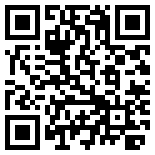 QR (Quick Response) Codes are not UPC (Uniform Product Code) barcodes on steroids. While both digitize information into a graphical image, they serve different functions. The UPC numeric bar code was first used for point-of-sale in 1974, and is required for all point-of-sale transactions in many countries. In 1994, Densoo Wave, a subsidiary of Toyota, developed QR Codes to track vehicles during the assembly process. There use was limited to the industrial applications, until the advent of smartphones. Smartphones essentially put a QR Code reader in everyone’s pocket, or purse. QR Codes are now used in commercial tracking, event ticketing, transportation ticking, product marketing, or in-store product labeling. They appear on business cards, T-Shirts, advertising, Web sites, and other forms of media.
An QR Code is a two-dimensional matrix code for storing information. The codes consists of black modules on a white background. A QR Code can store alphanumeric, binary, Kanji (modern Japanese characters), or Kana (syllabic Japaneses) data. The amount of information stored in a QR Code depends on the type of data, density of the blocks, and the degree of error correction. There are forty versions of QR Codes defined by the number of blocks in each dimension. Popular versions are Version 1 (21 X 21), Version 2 (25 X 25), Version 3 (29 X 29), Version 4 (33 X 33), Version 10 (57 X 57), and Version 40 (177 X 177). There are four levels of error correction defined by the percent of code words that can be restored: Level L (7%), Level M (15%), Level Q (25%), Level H (30%). At level H, Version 4 can store 50 characters, Version 10 stores a maximum of 174 characters, and Version 40 a maximum of 1852 characters.
A study by Competitrack illustrates the rapid growth of QR codes during 2011. At the beginning of 2011, less than 1% of the advertisers used QR codes. By the end of the year, the number of advertisers using QR codes was over 6%. In part, the number of competing standards limited the growth of 2d codes. QR Codes were used by 87.8% of the advertisers, Microsoft Tag garnered 10.2% of the advertisers, while other formats accounted for the remaining 2%. While Denso Wave holds the patent for QR Code (and registered trademark), they have never enforced the patent. QR Code is now defined by an open standard. Thus, there are QR Code readers for every mobile device. Microsoft Tag, on the other hand, can only be read by the Microsoft Tag Reader.
A QR Code reader requires that your mobile device have a camera. When you run a QR Code app, you take a picture of the QR code. The app processes the code and displays the result. QR Droid is the best, and most popular, QR Code reader for Android. This version does request permission to access contacts, browser history, and browser book marks. If you do not want grant these permissions, you can use QR Droid Private. The QR-GPS Plugin for QR Droid allows you to create a QR Code of your current location and share it. There are also QR Code readers for Blackberry, iPhone, Microsoft Windows 7, and Symbian (Nokia) phones. You can test your QR Code reader by taking a picture of the QR Code above, as it is the link to The Costa Rica Star.
There are a number of Web sites that generate QR Codes for free. Keremerken has the most flexible 2D code generator. QR Code Generator from the Zxing Project and QR Stuff also have good QR Code generators. For an Android device, My QR Code Generator and QR Code Generator Pro are two good QR Code generators. There are also QR Code generator extensions for the Google Chrome and Firefox browsers. Many URL shortners, such as bit.ly and goo.gl, automatically generate a QR Code. This is an easy way to track the usage of the QR Code.
QR Codes target mobile devices, and provide a great tool for making an instant connection in the mobile world. There is no need to remember a URL, phone number, physical address, email address, or a GPS location. These all can be encoded in a QR Code. QR Codes can be used for Search Engine Optimization (SEO) and Social Media Optimization (SMO). You can register your business with Google Places, and use the GPS coordinates in a QR Code for customers to locate your business. The possibilities are limitless.
The key to remember is that you are targeting the mobile user. Thus, a URL should point to a mobile ready Web page. It is also import to remember that the image size and quality must be readable on a smartphone. This YouTube video of the Grand Tara Hotel in Escazu is an example of how to use a QR Code in a promotional video. The problem is that the QR Code is not of high enough quality to be read by many QR Code readers. The intent is to provide an instant connection between viewing the video on a PC, and making a reservation via the smartphone. The result of a poor quality QR Code is a lost connection. Many’s House is a good example of how to use a QR Code in marketing real estate in Costa Rica. You can also use the QR Code to download a mobile wallpaper of Costa Rica vs. Mexico.
Costa Rica uses a 2D matrix code on the back of the cedulla and in passports. This is not a QR Code. There are many different 2D matrix codes, used in different applications. The QR Code happens to be the dominant code used for mobile devices.



