


 SIGN UP FOR OUR
 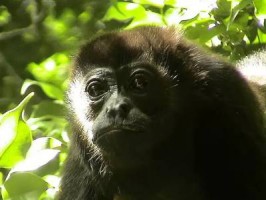 According to a recent article by Marisol Arias Murillo of the Voice of Nosara in Guanacaste, researchers from the University of Costa Rica (UCR) and a local electric utility in Nicoya are doing their best to alleviate the ghastly electrocutions of arboreal species in the region. The two entities will look at the current electric grid and determine the efforts that will be required to prevent electrocutions, as well as taking into consideration areas of heavy wildlife traffic and other factors when designing future expansion of electrical power infrastructure.
The Costa Rica Star has previously reported on this issue. In Guanacaste and other parts of Costa Rica, the electrical power grid and infrastructure pose a serious danger to monkeys, sloths, martillas and other arboreal creatures that suffer tragic deaths or crippling injuries. According to organizations dedicated to raising awareness and finding solutions to these grim situations, the statistics are ghastly.
Nosara Wildlife Rescue explains that hundreds of electrocuted monkeys were reported to local rescue groups in the years 2008 and 2009, which probably means that the number of annual cases are in the thousands. Salve Monos in Playa Hermosa in Guanacaste keeps a Facebook page dedicated to reporting monkey electrocutions. Looking at the posted reports from community members on Salve Monos’ Facebook wall, complete with graphic post-mortem photos of a howler mother and baby, one can count about a dozen tragic primate electrocutions in 2012 alone.
Coopeguanacaste, the local electric utility, will provide funding and logistics to UCR researchers, who in the past have conducted studies in the area with regard to the behavior of the howler monkey populations.
Results from those studies identified sites where protective bridges were placed between power lines to protect the arboreal creatures from the high tension wires, but that is not enough. In a call to action letter (PDF), the Nosara Wildlife Rescue explained that:
“Costa Rica lost half its monkey population in the 12-year period between 1995 and 2007.”
The figure above coincides with the dot-com and housing bubbles in the United States, and a period of strong foreign investment, tourism and economic growth in Costa Rica. Accordingly,
“[…] escalating commercial and real estate development, and the ongoing expansion of the electrical grid has intensified the problem.”
Monkeys are electrocuted when they form a circuit between parallel power lines, or when the branches and vines of the trees tat form part of the monkeys’ habitats grow out and touch a high voltage line or a transformer. Electrocutions are either lethal or horribly crippling.
Development in the Guanacaste region is unlikely to stop at this point, and thus initiatives such as the UCR and Coopeguanacaste’s partnership are vital to protect wildlife.



