


 SIGN UP FOR OUR

By Wendy Anders
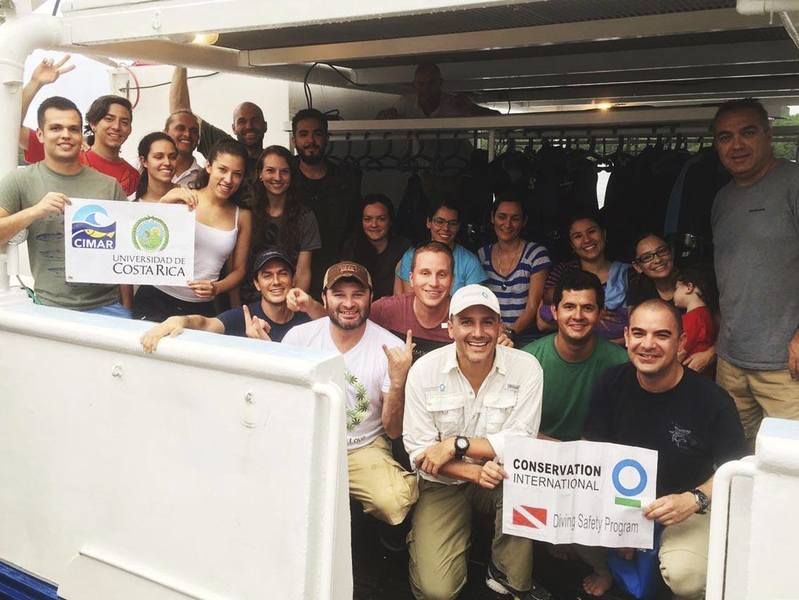
In December, scientists from Conservation International (CI) joined efforts with biologist Mario Espinoza of the University of Costa Rica (UCR) and several of his graduate students for an intensive ocean data gathering expedition.
The site: The waters of the Cocos Island National Park with their thriving shark colonies, and colorful tropical marine life and coral reefs. The park is also recognized as a United Nations World Heritage Site.
The aim: To collect data that will strengthen the case for increased protections of these waters, and expand scientific knowledge on how to best provide such protections.
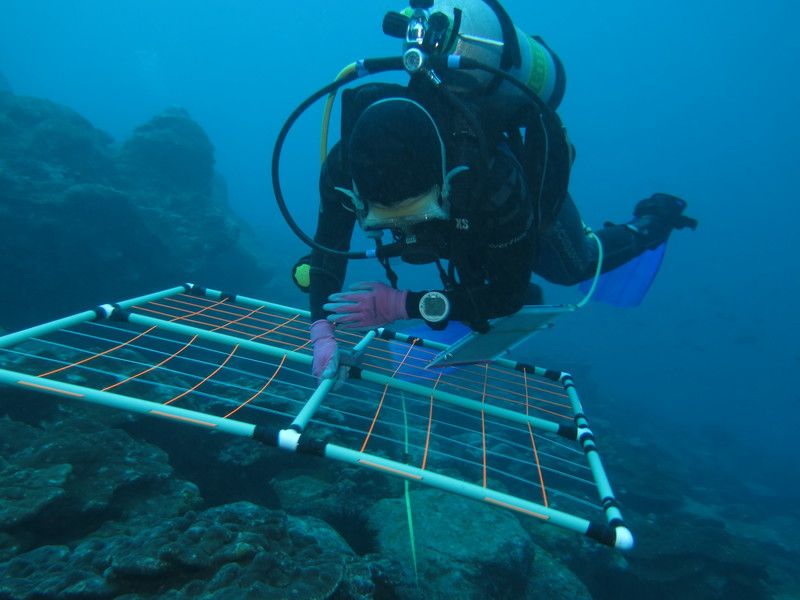
After a 36-hour boat ride over choppy waters to reach Cocos Island, the 18-person team spent a week and a half diving and observing to collect data that is now being sifted through and analyzed back at the UCR labs in San José, said CI.
“Our main objective was to assess the status of pelagic fish stocks — the species that spend most of their time far from coasts and the seafloor.
Monitoring the health of the reefs surrounding the island was also a priority. CI and the University of Costa Rica created a baseline years ago; since then scientists have been assessing changes that have occurred in this natural laboratory and exploring the influence of different factors, such as El Niño, illegal fishing, climate change or the implementation of better protection measures within the park’s waters.
But our scientists weren’t just comparing the past with the present. They were also implementing new research experiments never before conducted in Cocos Island’s waters,” said CI.
Espinoza has spent 10 years studying sharks and this first visit to the island that has been termed by biologists as the “Island of Sharks” was very momentous for him — and an important place to document what predators are doing when divers aren’t around, said CI.
The team of scientists wishes to understand more about predator behaviors and their numbers and health, as well as the health of the underwater ecosystems surrounding Cocos Island, where CI has worked for 12 years.
This is being done through marine life inventories that will be recorded by instruments set up for the following year, as well as analysing the chemical composition of the area’s waters to understand acidification.
Other researchers conducted the first analysis of sea urchin ecology in the Cocos Island region. Urchins serve important functions within the reef ecosystem, so assessing their populations and determining the extent to which they serve as a food source for other organisms is fundamental for understanding the health of the island’s reefs, said CI.
Conservation International, a global nonprofit who has worked for 30 years, according to their website, “To protect the most fundamental things that nature provides to all of us: our food, our fresh water, our livelihoods and a stable climate … human beings are totally dependent on nature — and by saving nature, we’re saving ourselves. To that end, CI is helping to build a healthier, more prosperous and more productive planet.”
Data collected on previous expeditions to Cocos Island and elsewhere in Costa Rica have been used to support numerous policies, including: the creation of two marine protected areas and the expansion of another one; the drafting of a national coral reef protection decree (currently in the final stages of approval); the banning of shrimp trawl fisheries in the country; and presently, the installation of an enforcement radar system in Cocos and a process to evaluate a potential increase in Cocos Island’s no-take zones, which would make more of the island’s waters off-limits to fishing, said CI.
Conservation International works with more than 2,000 partners in 30 countries. Over the years, CI has helped support 1,200 protected areas and interventions across 77 countries, safeguarding more than 601 million hectares of land, marine and coastal areas, according to their website.



