


 SIGN UP FOR OUR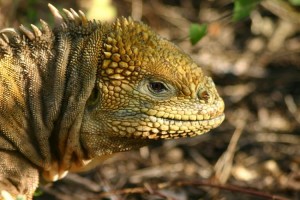
“Galápagos land iguana” by Charlesjsharp – Own work. Licensed under CC BY-SA 3.0 via Commons
Quito, Sep 7 (EFE).– A Mexican suspected of belonging to an international wildlife trafficking ring was arrested over the weekend when he tried to smuggle 11 iguanas out of the Galapagos Islands, the Ecuadorian Environment Ministry said.
The man allegedly captured iguanas and smuggled them out of the Galapagos with the assistance of “foreigners who arrived on the islands supposedly as tourists,” the ministry said in a statement.
This is the second time that the suspect, whose identity was not released, smuggled iguanas out of the country to mainland Ecuador and then to Uganda.
The suspect has a prior criminal record for wildlife trafficking and spent 18 weeks in jail in New Zealand in 2010 for illegally removing reptiles from that country.
The Mexican was arrested on Sunday afternoon when he tried to smuggle the marine and land iguanas out of Santa Cruz Island.
Investigators began looking into the international wildlife trafficking ring three months ago, the ministry said.
Convention on International Trade in Endangered Species of Wild Fauna and Flora, or CITES, officials alerted Ecuadorian authorities to the ring’s existence.
Ecuador has been a CITES signatory since 1975.
Wildlife trafficking is the third most profitable illegal activity in the world, trailing only drug and arms trafficking, the ministry said.
The crime is punishable by up to three years in prison in Ecuador.
The Galapagos Islands are located about 1,000 kilometers (600 miles) west of the coast of continental Ecuador and were declared a World Natural Heritage Site in 1978.
Some 95 percent of the territory’s 8,000 sq. kilometers (a little over 3,000 sq. miles) constitutes a protected area that is home to more than 50 species of animals and birds found nowhere else on the planet.
The islands were made famous by 19th-century British naturalist Charles Darwin, whose observations of life on the islands contributed greatly to his theory of the evolution of species. EFE



