


 SIGN UP FOR OUR
 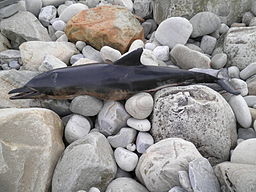 Surf fishermen in Peru are worried about the high number of dolphins they are finding dead in the water and on the beach. According to statistics compiled by Peru21, an online news portal in the Andean nation, 2012 has been a deadly year for dolphins. About 3,000 dolphin carcasses have washed up on the beach since the beginning of the year, and some experts believe it may be related to increased sonar activity by oil exploration crews.
Dr. Carlos Yaipen Llanos, a scientist working for non-profit marine mammal protective agency Blue Voice, counted 615 dead dolphins and 19 porpoises along 13 kilometers of Pacific shoreline in Peru from March 28th to April 6th. The mortality has been described as horrific. According to a spokesperson from the Chaparri Ecological Reserve, in the last few days 481 stranded dolphins ended up on the beach and died along 36 kilometers of Peruvian coastline.
Speaking to Peru21, Dr. Yaipen Llanos explained the “marine bubble” phenomenon that may be killing these dolphins:
“The oil exploration firms utilize different acoustic frequencies and wavelengths, and the effects of these sound bubbles are not visible to the naked eye, but they have harmful effects on animals. The acoustic impact can kill not only dolphins but also whales and other marine mammals. This impact can cause internal bleeding, disorientation, and loss of equilibrium.”
The long-nosed common dolphin (Delphinus capensis) is a species commonly found swimming off the Pacific shores in Costa Rica. It is a coastal and oceanic species and, according to a recent blog post by Blue Voice:
“the Delphinus capensis migrate from Costa Rica to the Central Pacific to northern Peru, too far away from the epicenter of any of the latest earthquakes (around 1000 km difference).”
The comment above is in relation to the theory that dolphins are killed by the force of strong underwater seismic movements. Dr. Yaipen Llanos also reported the results of his study on the dead mammals:
“Necropsies were performed on site. Macroscopic findings include: hemorrhagic lesions in the middle including the acoustic chamber, fractures in the periotic bones, bubbles in blood filling liver and kidneys (animals were diving, so the main organs were congested), lesions in the lungs compatible with pulmonary emphysema, sponge-like liver.
So far we have 12 periotic samples from different animals, all with different degree of fractures and 80% of them with fracture in the right periotic bones, compatible with acoustic impact and decompression syndrome.”



