


 SIGN UP FOR OUR

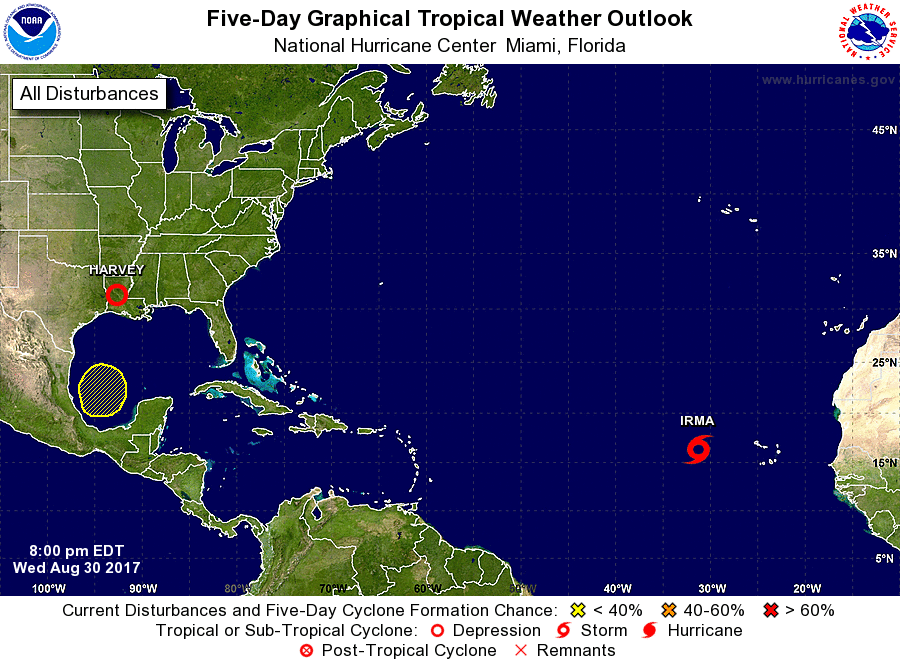
Hurricane Harvey has caused a lot of damage in Texas and some areas of Lousiana, the first major hurricane to make landfall in the United States since 2005, Harvey has now been downgraded to a tropical depression; but the 2017 hurricane season that began on June will not come to an end until November 30, and therefore countries in the Caribbean coast remain on alert.
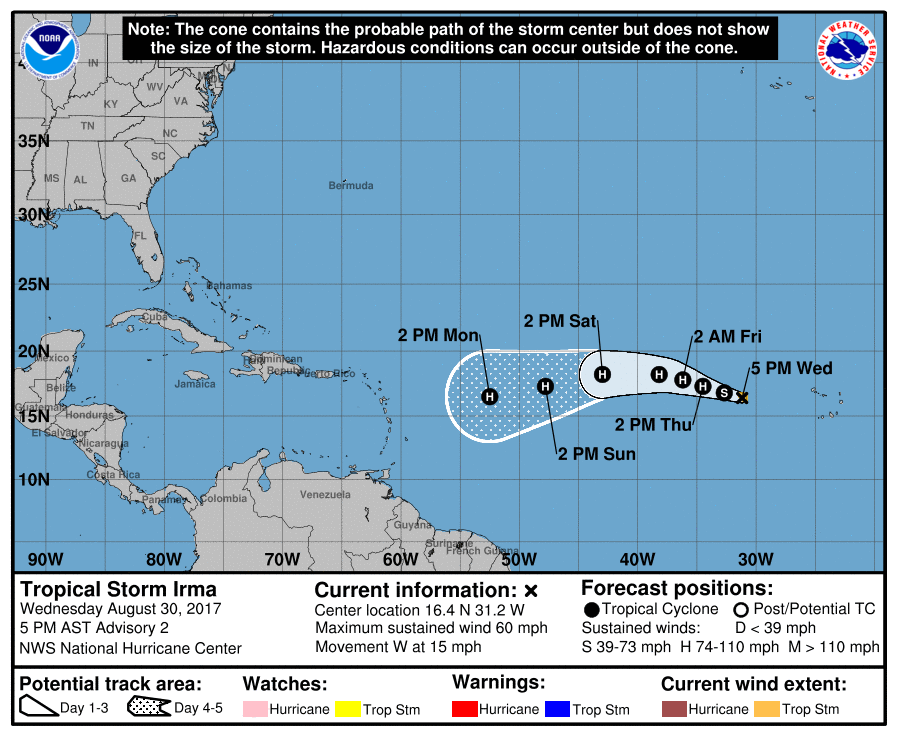
The National Hurrican Center (NHC) has declared Irma, forming in the Atlantic, the ninth storm this season and there is a strong probability that it could become the fourth hurricane this year as it moves through the Caribbean, it is however too early to tell.
The statement by the NHC reads:
“ At 1100 PM AST (0300 UTC), the center of Tropical Storm Irma was
located near latitude 16.4 North, longitude 32.2 West. Irma is
moving toward the west near 12 mph (19 km/h). A turn toward
the west-northwest is expected by Thursday, and this general motion
should continue through Friday.
Maximum sustained winds have increased to near 65 mph (100 km/h)
with higher gusts. Additional strengthening is forecast and Irma
is expected to become a hurricane on Thursday.
Tropical-storm-force winds extend outward up to 60 miles (95 km)
from the center.”
There is no way to know how the tropical storm will develop and which course it will take, at this point, it is not representing a current risk to any specific country but it is never too early to take preventive measures; the NHC continues to closely monitor Irma. Experts expect Irma to reach the Antilles next week but at this point, it could lose force and change paths. There is, however, a possibility that it continues to intensify and eventually pose a threat to locations in the Caribbean, including Costa Rica.



