


 SIGN UP FOR OUR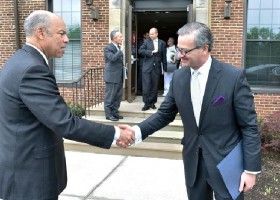
Source: U.S. DHS
WASHINGTON, May 4, 2015 – Today, Secretary of Homeland Security Jeh Johnson met with Costa Rican Foreign Minister Manuel Gonzalez Sanz to discuss opportunities for bilateral engagement on border security, information sharing, counter-narcotic efforts, and migration flows through Central America.
Secretary Johnson and Foreign Minister Gonzalez discussed opportunities to strengthen law enforcement collaboration and information sharing between the United States and Costa Rica. The Department of Homeland Security and the Government of Costa Rica enjoy robust bilateral law enforcement cooperation and routinely work together to combat transnational organized crime and enhance air, land, and maritime border management and security.
Secretary Johnson also highlighted the importance of engaging regional partners to collectively address illicit migration flows through the Western Hemisphere. He expressed support for Costa Rica’s effort to enforce border controls and reiterated the Department’s commitment to bilateral and regional cooperation to address these migrant flows. Secretary Johnson and Foreign Minister Gonzalez emphasized the strong history of friendly relations between the United States and Costa Rica, a partnership based on mutual respect for democratic freedoms, free trade, and other shared values.
As previously reported by The Costa Rica Star, the situation at the southern border in Paso Canoas has worsened due to the flow of migrants from Cuba and African nations such as the Democratic Republic of the Congo, who are traveling in groups through Central America to reach the United States as refugees.
Some Cuban migrants stranded at the border with Panama have threatened hunger strikes. The African groups are of a greater concern to the government because they have little to no support whereas many of the Cubans receive funds from relatives abroad.
For the time being, officials in Costa Rica are engaged in providing humanitarian support to the African migrants. This support includes meals, shelter, medical attention, and basic child care. Very few of these migrants have expressed a desire to stay in Costa Rica as refugees, where they can receive welfare and assistance from a government of humble means; for these migrants, the ultimate goal is to reach U.S. soil.



