


 SIGN UP FOR OUR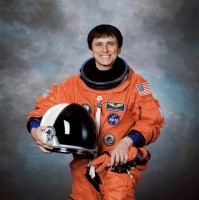
Dr Franklin Chang-Diaz
Earlier today, President of Costa Rica Luis Guillermo Solis opened the United Nations Workshop on Human Space Technology, a five-day international workshop on human space technology that will take place in San José until March 11th.
Keynote speeches were delivered by Dr. Franklin Chang Diaz, CEO of the Ad Astra Rocket Company and Hall of Fame NASA astronaut, and by Charles F. Bolden Jr., NASA Administrator and retired Major General of the United States Marine Corps.
The Workshop is organized by the United Nations Office for Outer Space Affairs in cooperation with the Government of Costa Rica and co-organized by the International Academy of Astronautics (IAA), as part of the Human Space Technology Initiative (HSTI) within the framework of the United Nations Program on Space Applications.
The Workshop brings together senior experts, professionals, and decision-makers from public sectors, academia and industries worldwide. The Workshop participants will exchange information on achievements in human space programmes and discuss how to promote international cooperation by further facilitating the participation of developing countries in human space exploration-related activities. It will also focus on creating awareness of the benefits of human space technology and its applications, building capacity in microgravity science education and research, and exploring participation in space commercialization.
Here are some of the topics that will be discussed at the Workshop:
- Microgravity science
- Research results and spin-off benefits
- Space- and ground-based microgravity facilities
- Capacity building and education
- Awareness of human space technology and its applications
- Education and outreach activities in microgravity science
- United Nations Zero-gravity Instruments Project (ZGIP)
- United Nations Drop Tower Experiment Series (DropTES)
- Human space flight and exploration
- Utilization of space stations in low Earth orbit
- Future human spaceflight activities beyond low Earth orbit
- Participation of new space-faring countries and emerging countries in human space exploration
- Space industry and commercialization
- Participation of space industry and the private sector in human space cooperation
- Public-Private Partnerships in space exploration and commercialization
- Commercial space activities and opportunities (space tourism, cargo transportation, in-space resource recovery)
- Environmental issues and natural hazards
- Low-orbit, in-space facilities for climate monitoring
- Next-generation sensor arrays for global monitoring
- Space-bound early warning global systems
- Next-generation low-cost experiments in fundamental physics
- Joint opportunities in space exploration for fundamental science in cosmology and particle physics
- A deep space mission roadmap for cosmology research
- Next-generation deep space experimental facilities for particle detection



