


 SIGN UP FOR OUR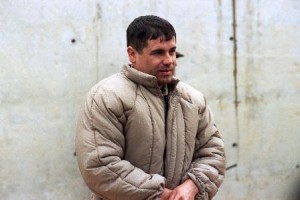
Joaquin “Chapo” Guzman. Source: Wikimedia Commons
The announcements by Mexico’s President Enrique Pena Nieto as well as by the United States Drug Enforcement Agency (DEA) reverberated around the world: Joaquin Guzman, the fugitive leader of the powerful Sinaloa Cartel, was captured by Mexican naval infantry forces over the weekend. Thousands of news media outlets around the world broadcast the news, quite a few mentioned Costa Rica and one even interviewed President Laura Chinchilla on the matter.
He was hiding in the gorgeous Pacific coast resort of Mazatlan when he was taken peacefully. His arrest followed a string of operations aimed at the strategic and operational leadership of the Sinaloa Mexican Drug Cartel, which many observers believe to be a global enterprise that transcends drug trafficking. Mr. Guzman is nicknamed “Chapo” due his short physical height, but in the world of drug trafficking he was a man of certain stature whose net worth of a billion dollars could have placed him on the lists of the wealthiest as compiled by business magazines such as Forbes or Fortune.
Comments by President Laura Chinchilla
National newspaper El Universal of Mexico got in touch with President Chinchilla just moments after Mr. Guzman’s arrest. President Chinchilla had just returned from a visit to Guanacaste, where she delivered a few major school projects prior to her upcoming departure from the Executive Office of Costa Rica. She told El Universal that President Pena Nieto had been fortunate in the sense that Mexican and U.S. authorities have been after him for quite a while:
“All of us who have been either directly or indirectly involved with fighting against drug trafficking must celebrate this important arrest announced today, which is a joint effort between Mexico and the U.S. and which sends a strong message to the major emporiums of violence and corruption such as the Mexican drug cartels.”
El Universal claims that the Sinaloa Cartel has been one of the most active in Costa Rica, which is a statement that dates back to the second administration of former President Oscar Arias. At that time, law enforcement in Costa Rica seized nearly 100 tons of cocaine along with cash, real estate and vehicle seizures. However, the precise connection to the Sinaloa Cartel has never been established unlike the acknowledgment of the presence and effective fight against the Knights Templar Cartel from Southern Mexico, which has been reported at length by the Costa Rica Star.
Business as Usual in Guanacaste
The number of arrests and seizures related to drug trafficking during the administration of President Chinchilla have reached records not achieved by her predecessors even though she does not agree with the violent philosophy of the U.S.-led War on Drugs and has actually gone on record to lend her support of decriminalizing personal drug use in Costa Rica (although Ticos are not quite ready for such a policy).
Over the last two years, law enforcement agents in Costa Rica have concentrated their efforts on Guanacaste and the northern region, where helicopter refueling stations have been found along with way points and logistics operations to facilitate the flow of traffic from South America to the U.S. These discoveries have not been tied to the Sinaloa Cartel, but it stands to reason that there may be a connection.
Unfortunately for Guanacaste and the rest of Costa Rica, the recapture of Mr. Guzman means little. The central and northern Pacific coasts of this country are very attractive for drug cartels before they reach Nicaragua, which is more of a lawless hub than a way point. Even if future arrests or seizures point to the work of the Sinaloa Cartel in Costa Rica, some experts believe that the Sinaloa Cartel is more like the major financial institutions of the U.S. that survived the financial meltdown of 2008. Writing for the Boston Herald, John Zaremba cites George Grayson, professor at the University of William and Mary and an expert analyst on drug cartel operations:
“I don’t see any great departure. This is not a cartel. This is a multinational corporation. They’re big in Europe. Big in Africa. They’re one of the two cartels that controls Guatemala. They’re in Australia. This is a corporation that has accountants, that has engineers, that has lawyers, that has scientists. This is not just a bunch of street ruffians who decided to sell some crack.”
In other words, the Sinaloa Cartel is no longer a criminal enterprise that can be nabbed and dismantled like some of its former counterparts that have gone down in the past. This might be the reason the Sinaloa Cartel cannot be pinpointed in Costa Rica: It may be indirectly operating in Guanacaste and elsewhere through a myriad subsidiaries, franchises and branch offices that may not even be aware of their connection to the major enterprise.



