


 SIGN UP FOR OUR
 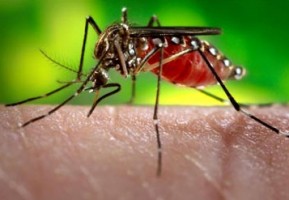 The Costa Rica Star has previously reported on outbreaks of Dengue Fever and H1N1 throughout Costa Rica.
Researchers at the University of Kansas and their counterparts at the University of Costa Rica have launched an educational campaign aimed at reducing the spread of dengue fever, a mosquito-borne infection affecting more than 50 million people annually.
“We’re working with our partners to make this a sustainable intervention,” said Mugur Geana, associate professor of strategic and director of the KU Center for Excellence in Health Communications to Underserved Populations.
Dengue fever, according to the Centers for Disease Control and Prevention, is the leading cause of illness and death in the tropics and subtropics. Symptoms include high fever, severe headache, severe pain behind the eyes, joint and muscle pain, and mild nose or gum bleeding. Severe cases can be fatal.
There is no vaccine for dengue infection, but locals in Costa Rica claim that Papaya seeds help in prevention and contraction.
Much of the KU-Costa Rica project is focused on helping impoverished communities find ways to improve garbage removal.
Research has shown that rain water collected in discarded tires makes for prime mosquito breeding grounds.
According to data from Costa Rican health officials, the country is experiencing one of the worst dengue-virus outbreaks in recent history.
“The knowledge of dengue is there,” Geana said. “It’s not like they’ve never heard of it. Almost everybody we talked with had a family member that has battled the disease.”
Already, researchers have conducted surveys aimed at assessing public attitudes toward the disease and previous prevention efforts.
“One of the problems we found is that local residents feel left behind, they feel they’ve been abandoned by their local government,” Geana said. “There is only a minimal sense of cohesion and almost no concentrated action at the community level to address any of the major public health and environmental issues that sustain the dengue epidemic.”
Over the next several months, Geana and his colleagues will be launching a public awareness campaign, working to reduce barriers to dengue prevention, promoting an online training course, and encouraging entrepreneurial approaches to garbage removal.
The project is funded by the Office of International Programs at KU and the Office of Research at the University of Costa Rica.
“Dengue is a huge problem in Latin America, but it is complex and there are no easy solutions,” Geana said. “This project shows that universities 3,000 mile apart can collaborate for the betterment of communities and bring their expertise and resources together to help people.”
Article by KHI.org



