


 SIGN UP FOR OUR
 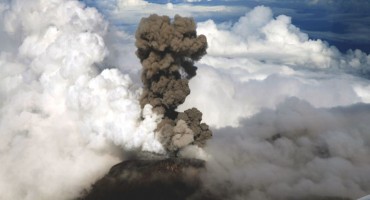 A special geodesic instrument similar to devices that connect to the Global Positioning System (GPS) satellite network will measure minuscule terrain changes near the Turrialba volcano for the purpose of assessing future eruptions. In the meantime, the forecast for acid rain in some regions of Costa Rica remains along with warnings about continuing ash clouds.
Scientists from the Observatory on Seismicity and Volcanology of Costa Rica (Spanish initials: OVSICORI) explained to Jason Torres of online news daily CRHoy.com that the instrument, which was installed at a relatively safe distance of three kilometers from the dangerous crater of the Turrialba, monitors the horizontal and vertical surface planes in terms of inflation or deflation. These changes are measured in millimeters, and they may suggest the flow of magma, gas or other volcanic matter. Geologist Geoffrey Avard explains:
So the point is that, should there be a magmatic intrusion, this means that there would be a shift in volume below the surface, and it could be an inflation or deflation. This can be monitored so that we know what lies beneath (!)
The good news from OVSICORI is that volcanic activity at the Turrialba has subsided in the last 24 hours, and thus ash expulsions are not as frequent now. Noxious gases such as sulfur, however, are now emanating at a heavier rate.
The instrument in question is called a geodesic monument, and it is located just outside of the Turrialba Lodge, a hotel that is frequently visited by volcano tourists. It is important to note, however, that the Turrialba National Park has been evacuated and is off limits to visitors. There is a strong chance of acid rain precipitation in the next few days; although this geological and meteorological event is not so harmful to humans, it is irritating and may signal emanation of other noxious gases.
Earlier this week, President Luis Guillermo Solis took time to recognize the work of Earth scientists from the OVSICORI and the National Seismology Network of the University of Costa Rica. President Solis spent time with geologists, petrologists, volcanologists, and seismologists to thank them for keeping us Ticos safe and informed.



