


 SIGN UP FOR OUR
 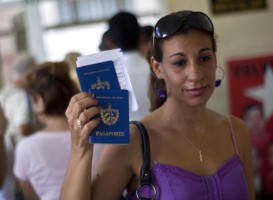 Shortly after the historic announcement by President Barack Obama of the United States and President Raul Castro of the Council of the State of Cuba on their renewal of diplomatic relations, the Ministry of Foreign Affairs in Costa Rica issued an institutional communiqué expressing satisfaction on this development.
Foreign Affairs Minister Manuel A. González Sanz stated:
“This is a happy moment for the Americas and for the world to learn of this news. Today is a day that marks an important ‘before and after’ moment in American history. It is a moment to heal the wounds that for many years have blocked multilateral development in the region. We are very enthusiastic about the enormous potential that can be released on the Americas due to this important decision made by Cuba and the United States, which we fully support.”
The State Department section of the United States Embassy in Costa Rica has kindly provided our publication with a Fact Sheet that explains in detail some of the immediate and near future measures that will develop as a result of this geopolitical announcement. The Costa Rica Star is pleased to bring you some of the most outstanding sections of this Fact Sheet; particularly those that impact our readers from the U.S. and other nations in the Americas.
It is important to note that not everyone is thrilled with this development. Dissident voices from political factions in the both the U.S. and Cuba have been strongly heard in the wake of the announcement. The Costa Rica Star welcomes diplomacy at all levels and also respects the opinions of all people with regard to this matter. Please feel free to leave your comments and make your voice heard on this issue.
It is also important to never forget history; to this effect, it helps to remember when Costa Rica played a strategic Cold War role in helping the U.S. conduct covert operations to topple the revolutionary government of Cuba presided by Fidel Castro; in fact, this was even the plot of a popular video game. As we have recently reported, such operations may have been conducted as early as this year.
- In the coming months, the U.S. will re-establish an embassy in Havana and carry out high-level exchanges and visits between the two governments as part of the normalization process. As an initial step, the Assistant Secretary of State for Western Hemisphere will lead the U.S. Delegation to the next round of U.S.- Cuba Migration Talks in January 2015, in Havana.
- The United States will work with Cuba on matters of mutual concern and that advance U.S. national interests, such as migration, narcotics interdiction, environmental protection, and trafficking in persons, among other issues.
- Travel and remittance policies will help Cubans by providing alternative sources of information and opportunities for self-employment and private property ownership, and by strengthening independent civil society.
- General licenses will be made available for all authorized travelers in the following existing categories:
(1) Family visits
(2) Official business of the U.S. government, foreign governments, and certain intergovernmental organizations
(3) Journalistic activity
(4) Professional research and professional meetings
(5) Educational activities
(6) Religious activities
(7) Public performances, clinics, workshops, athletic and other competitions, and exhibitions
(8) Support for the Cuban people
(9) Humanitarian projects
(10) Activities of private foundations or research or educational institutes
(11) Exportation, importation, or transmission of information or information materials
(12) Certain export transactions that may be considered for authorization under existing regulations and guidelines
- The policy changes make it easier for Americans to provide business training for private Cuban businesses and small farmers and provide other support for the growth of Cuba’s nascent private sector. Additional options for promoting the growth of entrepreneurship and the private sector in Cuba will be explored.
- Remittance levels will be raised from $500 to $2,000 per quarter for general donative remittances to Cuban nationals (except to certain officials of the government or the Communist party); and donative remittances for humanitarian projects, support for the Cuban people, and support for the development of private businesses in Cuba will no longer require a specific license.
- Licensed U.S. travelers to Cuba will be authorized to import $400 worth of goods from Cuba, of which no more than $100 can consist of tobacco products and alcohol combined.
- U.S. credit and debit cards will be permitted for use by travelers to Cuba.



