


 SIGN UP FOR OUR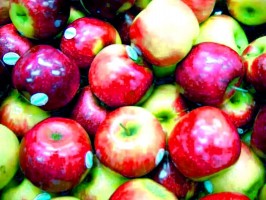
Public domain photo
By Elvira Palomo.
Washington, Feb 24 (EFE).- Genetically modified apples that do not brown will be available in U.S. grocery stores by 2015 with the expectation that waste will be curtailed and sales will expand, despite criticism of altered foods by some groups.
The U.S. Department of Agriculture said that, after rigorous scientific reviews, it determined that the varieties developed by Canada’s Okanagan Specialty Fruits were “unlikely to pose a plant pest risk to agriculture” and were “not likely to have a significant impact on the human environment,” and would allow its cultivation in the United States.
The Arctic Granny and Arctic Golden varieties will be the first apples genetically modified in a laboratory to enter the U.S. market, Okanagan Specialty Fruits president Neal Carter told Efe.
Okanagan submitted a petition to the USDA in May 2010, “but we had been collecting data for their review for many years,” Carter said, adding that Arctic apples have been cultivated in test groves since 2003.
These apples have been modified so that, once cut open, they do not brown when they come into contact with the air, a natural reaction that turns the fruit’s pulp into a color that consumers find unpleasant, the company says.
“Our market research has shown that most apple consumers wish that the fruit did not turn brown and that is why we believe there will be big demand once these varieties are in stores,” Carter said.
The idea for the genetically modified apples came up when growers noted stagnation in the consumption of the fruit while other products, such as baby carrots, became increasingly popular as a healthy alternative for snacks.
That is a success that Okanagan expects to emulate by offering cut apples, which account for only 2 percent of the market.
Apples are one of the world’s most wasted foods due, in part, to browning, but these two varieties “may help get more people eating apples while, at the same time, we reduce food waste,” Carter said.
The genetically modified apples, however, also have their critics.
“This product is totally unnecessary and poses great risks for apple growers, the food industry and consumers,” Center for Food Safety executive director Andre Kimbrell said in a statement.
The Center for Food Safety is a non-governmental organization whose mission is to protect human health and the environment. EFE



