


 SIGN UP FOR OUR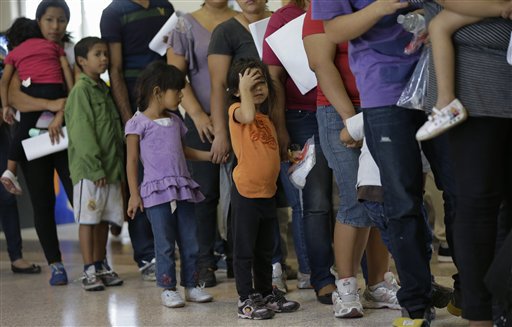
(Image for illustrative purpose / ICR-CRS Archive)
Fleeing violence and misery in their home countries, the number of people seeking refugee status in Costa Rica nearly doubled last year, according to data from the Office of the United Nations High Commissions for Refugees (UNHCR).
Costa Rica received some 2,300 applications for asylum in 2015 compared to some 1,400 a year earlier, according to the UNHCR.
According to the UNHCR, Costa Rica witnessed a significant surge in citizens of El Salvador seeking asylum in the country last year, as the country’s homicide rate soared to its highest level in a generation.
Some 800 of the 2,300 asylum requests processed by Costa Rican authorities last year were from Salvadoran nationals, according to the UNHCR, an increase of 144 percent from a year earlier, according to the General Directorate of Migration and Immigration of Costa Rica (DGME), which also notes that 193 of those were minors.
Asylum requests from Venezuelan nationals also nearly doubled last year, from 131 refugee claims in 2014 to 256 in 2015.
The number of asylum requests by Colombian nationals remained essentially unchanged last year, with 555 Colombian nationals seeking refugee status in the country, according to data released in January by the DGME.
Central America’s hidden displacement
Rampant gang violence, poverty and the lack of jobs push hundreds of people a month to leave the ‘Northern Triangle’ nations of El Salvador, Honduras and Guatemala.
In El Salvador and Honduras – which have the world’s highest murder rates – entire city neighborhoods are controlled by powerful street gangs, known as maras. They use extortion, sexual violence against girls and women, threats, killings and forced recruitment of children to exercise control.
“We have a situation that affects the lives of thousands of people because of widespread violence related to organized crime. What you have here is forced displacement,” Vicente Raimundo, head of the European Union humanitarian aid department (ECHO) regional office for Central America, Mexico and the Caribbean, told the Thomson Reuters Foundation in January.
“Our concern is for those who are fleeing their homes because they are under threat, their relatives have been killed or they fear they are next on the list. They need to be protected. This is a big issue and we need to do more.”
To escape gang violence, families often first move from their homes to other neighborhoods or cities within their own country, then seek refuge abroad, increasingly in Panama and Costa Rica.
“This is a hidden and urban phenomenon that is invisible and difficult to see. But it doesn’t mean it doesn’t exist,” Raimundo said.
El Salvador is believed to be home to more than 70,000 gang members. The country’s Supreme Court declared street gangs to be terrorist groups in August of last year.
Venezuela economy in shambles
Meanwhile, Venezuelans are also increasingly seeking asylum in Costa Rica, fleeing a crumbling economy where shortages of basics from milk to medicines has become common.
Venezuela’s Central Bank, which has been lambasted by critics of President Nicolas Maduro’s government for hiding statistics since the end of 2014, said in January that the South American OPEC nation’s economy shrank 4.5 percent in the first nine months last year.
Inflation soared in that period to an annual rate of 141.5 percent, the world’s worst.
Venezuela’s oil-dependent economy is forecast to perform abysmally again in 2016. Maduro lost control of the National Assembly in a December election due to voter ire over the crisis.
“We are confronting a true storm,” Maduro said during his state-of-the-nation address to Congress. “This is not Maduro’s storm, as some believe, it is a situation throughout the country that affects every Venezuelan family.”
Maduro, a former bus driver and foreign minister who was elected to replace Hugo Chavez in 2013, has stuck to his mentor’s policies of strict currency and price controls.
With massive shopping lines in Venezuela and widespread shortages of basics from milk to medicines, the government faces mounting pressure to change what critics call a failed model.
Costa Rica eyed for UN refugee camps, according to report
Perhaps impressed with its recent handling of the Cuban migrant crisis, officials in the United States are eyeing Costa Rica as a possible location to establish UN refugee camps for those waiting to be screened for asylum in the US as part of a plan by the US to significantly expand its own refugee program to those fleeing violence in El Salvador, Guatemala and Honduras, the New York Times reported in January.
As it has done in Turkey and Jordan for refugees fleeing the civil war in Syria, the United Nations High Commission for Refugees (UNHCR) would set up “processing centers” where migrants from El Salvador, Guatemala and Honduras would be temporarily out of danger while being housed and screened for possible admission as refugees to the United States and possibly other countries.
Citing “people who were briefed on the plans,” the New York Times report says that Costa Rica as well as Belize and Mexico are under consideration as possible locations for the refugee centers.
“The migrants would stay in the temporary centers while the United Nations was reviewing them [sic], but it has not been decided if they would be in camps or some other, less restrictive shelters,” the Times said.
Tens of thousands of people would likely flow through the centers each year, and as many as 9,000 per year could eventually be resettled in the US, according to the report.
US Secretary of State, John Kerry, announced in January that the US government plans to significantly expand its Refugee Admissions Program to include immigrants from El Salvador, Guatemala and Honduras who are fleeing violence in their homelands.
The goal is to provide Central American families a “safe and legal alternative to the dangerous journey many are currently tempted to begin, making them easy prey for human smugglers,” Kerry said in a speech at the National Defense University.



