


 SIGN UP FOR OUR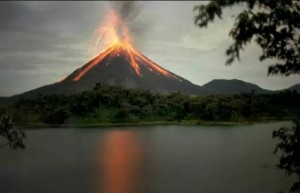
The Magnificent Arenal in 1997. Source: Smithsonian Institute
If you are planning on visiting our imposing volcanoes during Easter Week, the National Council on Emergencies (CNE in Spanish) wants you to take exercise extra caution. There are currently five active volcanoes in Costa Rica now, and some have been acting up lately.
The seismic and volcanic research departments at the University of Costa Rica (UCR) and the National University (UNA) are keeping a close eye on the following colossi: Arenal, Irazu, Poas, Rincon de la Vieja, and Turrialba.
Current Volcanic Status around Costa Rica
Neighbors of the communities surrounding the Turrialba volcano have been treated to some spectacular plumes of smoke thanks to cloudless skies this week. The CNE is not planning to lift the green alert on the national park near the volcano due to noxious gas emissions. Over 100 community leaders and volunteers have been trained on evacuation protocols.
The Irazu does not present any visible signs of eruptions, but the number of slight earthquakes detected around it moved the CNE to ask visitors to remain alert. The seismic action in the area has subsided considerably, but park rangers and visitors have reported feeling tremors.
Park rangers and volcanologists stationed at the Poas volcano have noticed inner-crater eruptions of mud (not lava) and some gaseous output. Don’t be surprised if park rangers ask you to evacuate or deny you entrance to the park if you decide to visit this week.
The Arenal and Rincon de la Vieja volcanoes continue to present phreatic (ground water) activity, and thus rangers are vigilant. Informative signs have been posted throughout the trails and facilities.
While for many tourists the opportunity to see a live volcano may be very exciting, the CNE asks everyone to consider visiting other nice volcanoes that are peacefully dormant; such as the Barva, Miravalles and the Platanar.
Earlier this year, the CNE flew over the volcanoes to get a visual assessment on the situation. If you’d like to see that really cool video, click here.
You can also read “Drones For Science, Not War”, an article in The Costa Rica Star that looks at Tico researchers using drones to study volcanoes.



