


 SIGN UP FOR OUR
 Buenos Aires, Jan. 10 — President Mauricio Macri said Tuesday that oil companies and unions reached an agreement to produce natural gas at Vaca Muerta, one of the world’s largest shale oil and gas fields, in a deal that will generate $5 billion in investment in Argentina this year alone.



“The companies are committed to a virtuous investment process that will be $5 billion” in 2017 and double in subsequent years, the president said during an event at the Casa Rosada presidential palace.
The energy companies agreed to ramp up investment to $10 billion in 2018, with the amount of capital rising until it reaches $15 billion annually, Macri administration officials told EFE.
The project will make it possible for “tens of thousands of families” to move to “the development zone,” Macri said.
The majority of the non-conventional Vaca Muerta play is in the southwestern province of Neuquen.
The agreement was signed by the federal and Neuquen governments; oil industry unions; Pan American Energy, Total, Shell and Chevron; chemical industry giant Dow; and state-owned YPF, which has a 50 percent stake in the shale play.
Neuquen’s government agreed to not raise taxes, a key element in ensuring the viability of investment plans, and to improve infrastructure in the region, a project that the central government will contribute to.
Argentina’s national gas plan, which is set to expire in December, will be extended until 2020 to guarantee a floor price for gas producers, Macri said.
Union leaders, for their part, agreed to add clauses to boost productivity to collective bargaining agreements.
Rio Negro, Neuquen and La Pampa Private Oil and Gas Workers Union president Guillermo Pereyra, who helped negotiate the deal, said the agreement would “improve” working conditions for union members and denied it introduced “labor flexibility.”
The Vaca Muerta project moves Argentina into “a future stage” in the development of the energy industry, Macri said, adding that without this venture “there is no growth,” development or poverty reduction.
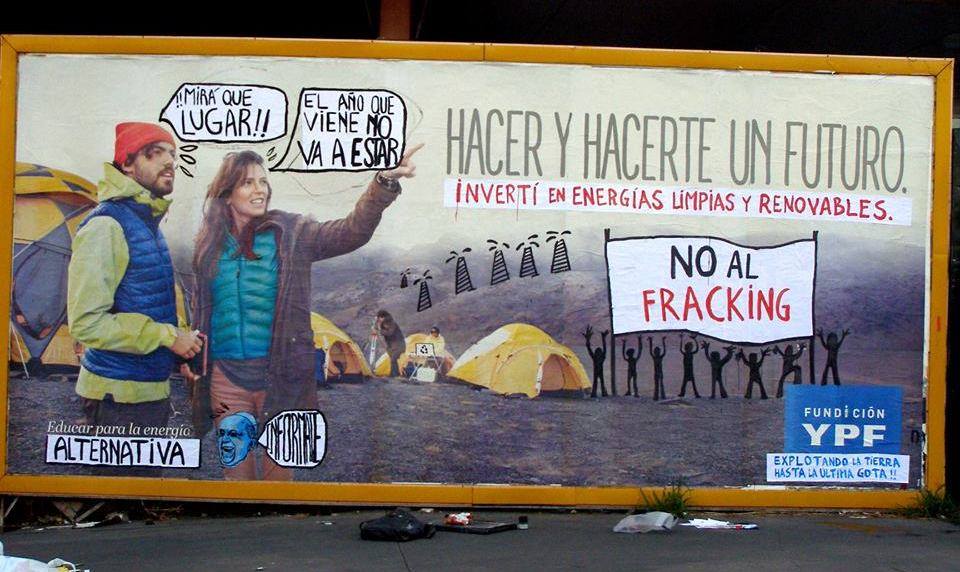
Environmentalists, farmers and Indians strongly oppose the non-conventional oil and gas play, arguing that Vaca Muerta will lead to the release of large amounts of methane gas into the atmosphere and pollute Neuquen’s aquifers.
Oil and gas in non-conventional fields is produced using hydraulic fracturing, or “fracking,” a controversial method that involves pumping a pressurized fluid – usually composed of water, sand and chemicals – into a shale formation to create a fracture in the rock layer and release trapped petroleum or natural gas.
YPF announced the discovery of non-conventional oil and natural gas reserves in Vaca Muerta in 2011 after successful results in the exploration phase. EFE



