


 SIGN UP FOR OUR
 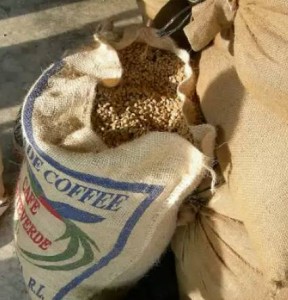 Financial analysts and different news media outlets have been busy reporting on the output of coffee crops in Costa Rica, and the reports paint a different picture regarding production and climate. Costa Rica’s most prized agricultural commodity is either holding up well in the wake of climate patterns caused by La Nina, or weakening to the point that Tico roasters will import more bags of coffee this year than ever before.
On-the-ground reports of early blossoms were published by The Costa Rica Star on April 12th. Early coffee blossoms, which from afar look like snowflakes accumulated on the coffee plants, were reported by farmers on the skirts of the Poas volcano and near Monte Azul mountain boutique hotel near the Chirripo mountain. On that same week, a report published on the NASDAQ indicated that the forecast for Costa Rica and the rest of Central America is pretty good for the 2012-2013 harvests.
According to El Financiero, a respected financial publication in Costa Rica, the March 2011 to October 2012 coffee harvest yielded an increase of 4.6 percent -a figure which pales in comparison to the increases reported by coffee exporters in Honduras and Mexico, where the increases are well over 20 percent. That report was published yesterday.
On April 8th, a news report on Colombian financial publication Portafolio cited a figure from iCafe, the government agency in charge of coffee affairs in Costa Rica, which pointed to an export drop of 1.7 percent in March on a year-over-year basis. That report from Portafolio also mentioned that Latin America coffee producers expect improved crop yields now that the worst of La Nina is over.
La Nina is weather phenomenon counterpart to El Nino that caused record precipitation levels in 2010 and 2011. Coffee exporters blamed La Nina’s excessive rainfall for their crop losses.
Coffee farmers and roasters seem to be in disagreement with the reports above. A recent Bloomberg news article cited a report by Escritorio Carvalhaes, a widely respected coffee futures broker in Brazil, indicating that Tico roasters have been importing tens of thousands of bags of the prized bean from Mexico and Peru over the last three years, a practice they estimate will increase to 150,000 bags (about 9,000 metric tons) this year.
The basis for Escritorio Carvalhaes’ claims is the following:
“A committee from the Costa Rica Chamber of Coffee Roasters is visiting Brazil to learn about our quality control programs and our industry incentive programs, and to take a look at our crops. What a surprise it is that Costa Rica has turned into a coffee importer!”
Bloomberg continues the report:
“In the last three years, with smaller harvests, especially because of weather changes, coffee production in Costa Rica has been insufficient to meet consumption and exports. The solution found by the Central American country was to import.”
It may be difficult for coffee futures traders to glean the right information from the reports above as they take positions on the market, and for the time being it seems as if they are nonplussed. Arabica coffee futures are sitting at 18-month lows, with some occasional spikes mostly created by opportunistic traders.



