


 SIGN UP FOR OUR

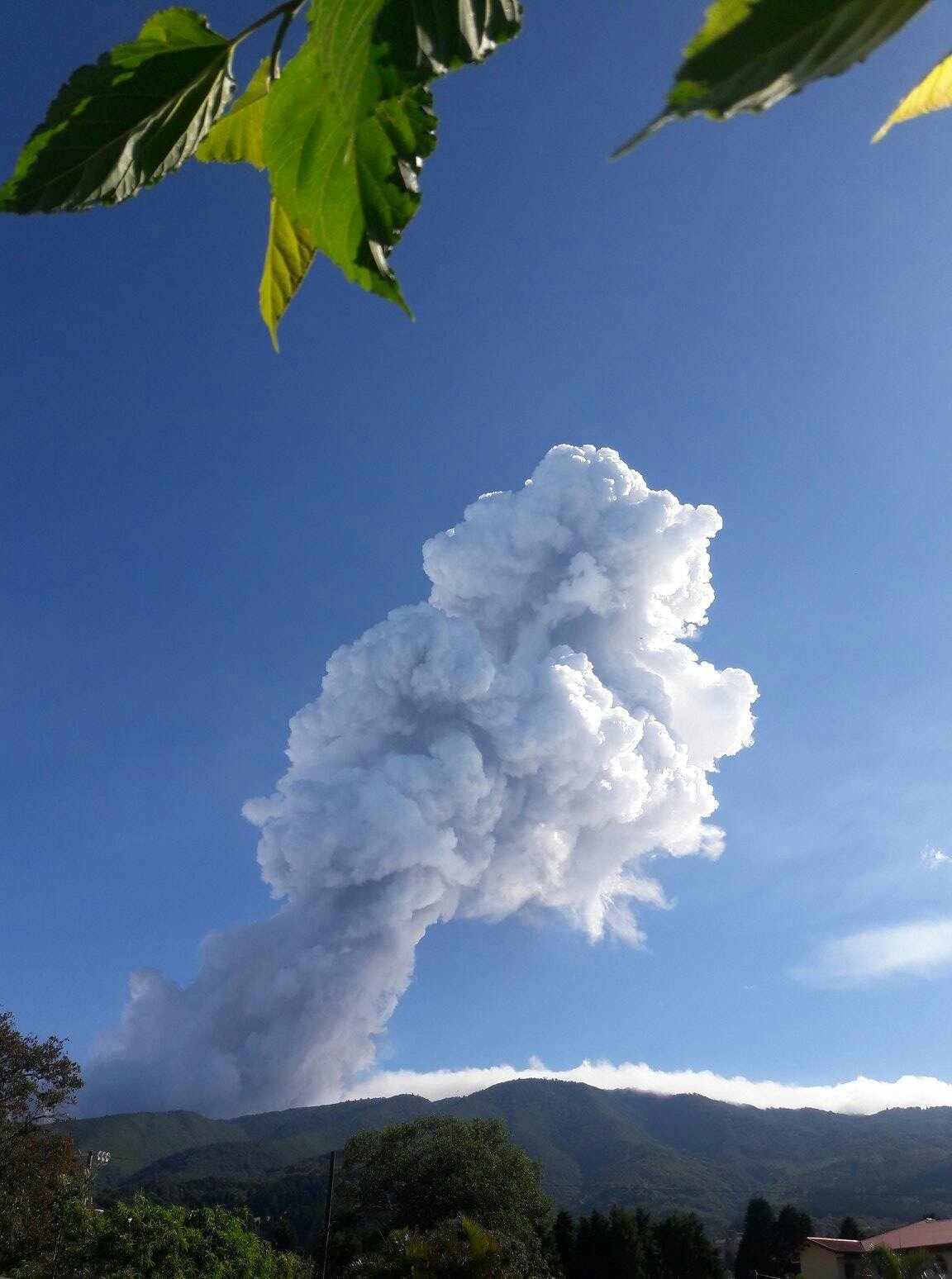
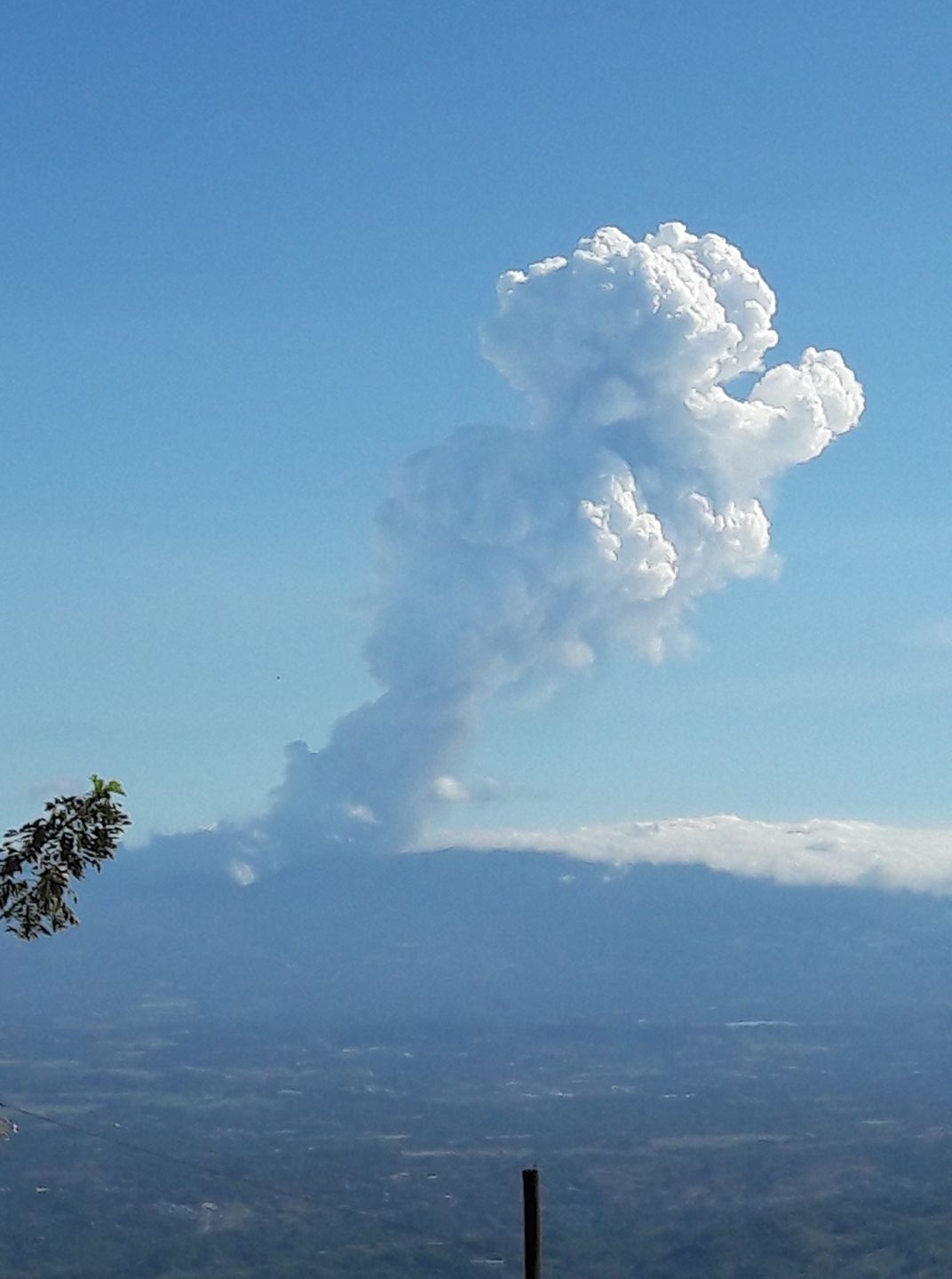
Poás Volcano had its two biggest eruptions this morning in this recent phase of activity, said the Volcanology and Seismology Observatory at the Costa Rican National University (Ovsicori-UNA).
A blast at 7:39 followed by a bigger one at 7:57 a.m. sent gases in both a westerly and easterly direction, and would possible be felt, or rather smelt, in the towns of Zarcero, Naranjo, San Ramón, Palmares, Sarchí, Grecia, Fraijanes, San Carlos, and other small towns in the region.
In contrast to the Turrialba Volcano, which is in a period of relative calm, with its usual thick gray columns of ashy eruptions that settle all over neighboring towns, the Poás’ cauldron is emiting primarily vapor and gas and are known as phreatic, or steam, eruptions. The scenes of the blast are impressive, but local residents will mainly only sense sulfur fumes, although some reports of ashfall have been recorded on the Ovsicori Facebook page.
Initial estimates of a 500-meter-high column were later reported in Costa Rica’s daily La Nación as having reached 3 kilometers in height, according to volcanology specialist Javier Pacheco Alvarado.
The National Emergency Commission is maintaining the lowest level, or a Green Alert, due to the increase in the volcano’s activity, but said there are no human or environmental damages as a result of the eruptions, and no effect on agriculture in the region. The Poás National Park remains closed to visitors until further notice.
As a preventive measure, residents are asked to stay away from the following rivers and streams in the region: Desagüe, Agrio, Gata and the Toro Amarillo, as these may experience changes due to the volcano’s activity.



