


 SIGN UP FOR OUR
 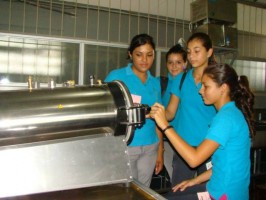 The Ministry of Science and Technology (MICIT) announced last week the opening of the Laboratory for the Cultivation of Vegetable Cell Tissue, a new biotech center in the Turrubares region of Costa Rica. This new center will be part of the Technical and Professional School, and it is part of the Tech Business Creation initiative of the MICIT.
Minister Alejandro Cruz presided over the opening ceremony of the new center. He stated that scientific and technology training have become paramount in Costa Rica, and that his Ministry is committed to supporting high-tech vocational education and on-the-job training.
The director of the school in Turrubares, Don Silvio Calderon, explained that the laboratory started with a simple idea and vision, and that he is very impressed to see it come to fruition:
“This has been a process that we see today turn into reality; many people and institutions have made it possible. This is a learning and production laboratory, something that will help us train our students and bring real benefit to the community at the same time.”
The new center will focus on the production of seeds that are asexual, uniform and resistant to common diseases such as those caused by fungus. The idea is to provide farmers in the community with eco-friendly and sustainable seeds that yield better crops. According to Ruben Arjona, Biotech Coordinator of the MICIT, seeds used in the past were often contaminated or predisposed to contract diseases that originate in the soil. The new center in Turrubares will concentrate on production of healthy and tolerant seeds.
The students and researchers will work on identifying seeds that are naturally healthy and that perform well under certain conditions. The cellular makeup of these seeds will then be replicated. The idea is to no longer depend on agrochemical products that are harmful to other organisms and eventually to the soil, at the same time improving the quality of life of farmers and their communities.
The overuse of herbicides and pesticides has been a major problem in many parts of the world; in Cuba, for example, farmers and scientists are figuring out ways to protect their crops after years of mass farming with agrochemicals, which created adverse soil conditions.



