


 SIGN UP FOR OUR
 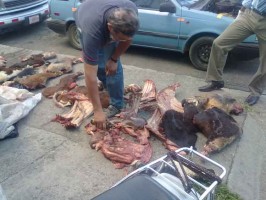 In an effort to stop the illegal cattle meat trafficking, the MICIT’s Financing Incentive Fund will make it possible to resolve crimes by performing livestock paternity tests. Twenty eight million colones will be destined to this project during a twelve month period.
Recently the instances of meat being sold from illegally butchered animals in unsanitary conditions has plunged farmers into a severe crisis in the country. Previously, the identification of animals and farms in critical areas was difficult due to the technological limitations. Now, seized meat will be identified with more accuracy and in a faster manner thanks to DNA testing.
The results of these tests can be utilized as evidence in the event of prosecuting the criminals behind these actions. This is an improvement that will prove a great tool for authorities who will now lead their battle against illegal butchering of livestock hand in hand with genetic studies.
The project is called “Use of molecular markers for Identification and verification of kin in cattle “, which will help the Judicial Investigation Organization (OIJ) in these procedures.
The Ministry of Science and Technology of Costa Rica, MICIT led by Minister, Ing. Alejandro Cruz, aims to promote the scientific and technologic development of such projects, as part of the National Plan for Science Technology and Innovation 2011-2014 which incorporates a series of actions aimed at strengthening research, development, innovation and human capital to solve problems that affect the general Costa Rican population.
Using this technology to identify cases of livestock theft, will protect Costa Ricans from purchasing and consuming unsanitary or potentially contaminated meat and meat products which could lead to a pandemic.
There are organized mafia groups in various parts of the country dedicated to illegal cattle trafficking which are terrorizing the country, Cartago and Guanacaste being some of the most affected areas.The losses reach millions of colones and health of the population is at risk.
Theft of livestock and meat is a serious offense under the Theft Act and Receipt of Cattle (Ley de Robo Hurto y Receptación de Ganado Bovino) criminally punishable by imprisonment, confiscation of vehicles and heavy fines.
Although SENASA, the Costa Rican police force and OIJ are constantly conducting operations to enforce the law and its regulations, the main obstacle they’ve faced has to do with being able to prove the proceeds of the butchered cattle. With this technological advancement promoted by MICIT, authorities are expecting to reduce the number of cases of this type of crime that end unpunished.



