


 SIGN UP FOR OUR
 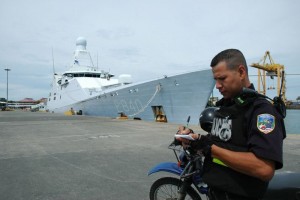 Earlier this week, the Caribbean Port of Limon was the temporary home of Patrouillevaartuig Zr. Ms. Holland (P840), a magnificent patrol boat in the service of the Coast Guard of the Kingdom of the Netherlands. This vessel’s visit to Costa Rica was carried out in support of the ratification of a treaty that creates a Joint Patrol Agreement between our country, the Netherlands, and other nations that have sovereign interests in the Caribbean.
Going back to the 1990s, Costa Rica and the Netherlands had already worked together to design an international collaboration agreement that would bring together various nations to control drug trafficking over the azure skies and warm waters of the Caribbean, which is a region that was besieged by drug trafficking in the 1980s, a time when Miami was widely considered to be the international cocaine capital of the world. In 2003, a treaty was formalized to allow the joint operation of maritime security forces in the Caribbean.
Although this particular treaty is not as commonly known as the controversial Joint Patrol Agreement between Costa Rica and the United States, it is important to note that the Netherlands keeps the Kustwacht Caribisch Gebied (Dutch Caribbean Coast Guard), and active maritime service dedicated to search and rescue as well as law enforcement operations.
In addition to the crew of the Zr. Ms. Holland, Dutch Ambassador Mette Gonggrijp was on hand to preside over the ongoing ratification of the treaty. Also in attendance were diplomatic officers from France, Guatemala, Honduras, Panama, the European Union, the Organization of American States, and (as expected), the United States. Ambassador Gonggrijp explained that this meeting in Puerto Limon has mostly consisted of reviewing the needs of all nations to enforce the provisions of the treaty, and how to entice more Caribbean nations to join in this effort.



