


 SIGN UP FOR OUR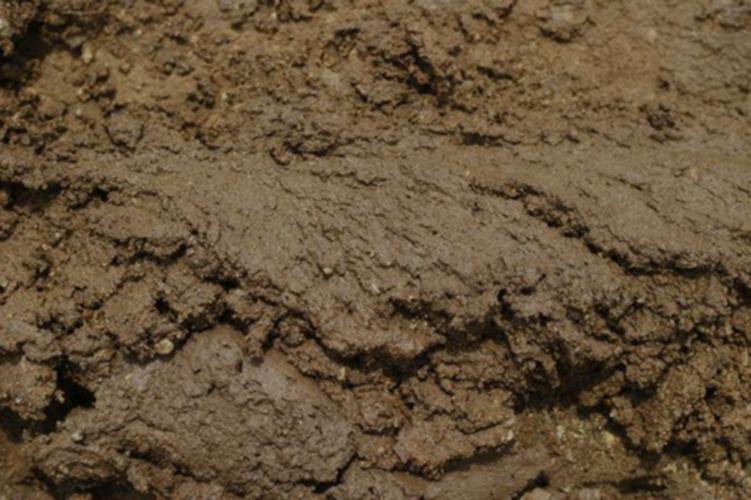
Flickr Commons
Rio de Janeiro, Nov 8 (EFE).– Rescue teams on Sunday found the bodies of two people who died in the avalanche of mud and mining residue that virtually wiped out seven Brazilian towns last week after two dikes ruptured.
The governor of the state of Minas Gerais, Fernando Pimentel, said Sunday that hopes are dwindling for finding alive any of the 28 people who went missing when the avalanche struck.
“Given that time is passing, hope is dwindling,” said Pimentel at a press conference in Mariana, the city most severely affected by the tragedy, which occurred when two dikes ruptured at a mining complex operated by the Samarco company, laying waste everything in the path of the avalanche for a distance of 60 kilometers (37 miles).
Pimentel said that it would be “difficult” to find any of the 13 missing Samarco workers who were swept away or buried by the avalanche, although he said that there was still hope among authorities of finding one or more of the 15 local residents whose whereabouts are unknown.
With the two bodies found Sunday, authorities have confirmed the deaths of four people, but only one person – a Samarco worker who died of a heart attack – is on the official death toll so far because the other three people have not been identified.
Of those three victims, the body of one was found on Saturday in the Doce River some 100 km (62 mi.) from the mine and the other two were dug out of the mud that covers the area.
Firefighters had found the body in the river on Saturday and counted that person among the dead, but he was removed from the list on Sunday and will remain off of it until DNA tests can be carried out to try and identify him.
Sixteen people were injured in the accident but only two women remain hospitalized in stable condition, firefighters said.
Rescue crews on Sunday resumed searching for survivors and reestablished access to the towns that had been isolated by the avalanche of mud, the governor said.
Some 200 firefighters, police, Civil Defense personnel and army troops are participating in the search operation.
Mariana Mayor Duarte Junior had to be hospitalized on Sunday due to stress and exhaustion, but doctors ruled out that he had suffered a heart attack.
The two most devastated villages in the Mariana municipality are Bento Rodrigues and Paracatu de Baixo, where few buildings were left standing after the mudslide struck.
Most people living downriver were warned by telephone, and had a few minutes to get away by whatever means were available before the mudslide struck, according to the mine operator Samarco, an enterprise jointly owned by Brazil’s Vale and Australia-based BHP Billiton.
Civil Defense estimated that some 2,500 people have been left homeless.
The mudslide not only destroyed or buried homes, crops and pastureland, but also dumped its content of heavy metals into the Doce River, one of the largest in southeastern Brazil.
Samarco said the mines at the moment of the accident held close to 7 million cubic meters (247 million cubic feet) of mineral residues and 55 million cubic meters (1.9 billion cubic feet) of water.
Samarco denied that the mudslide residues were toxic and described them as residues “mostly” composed of silicon, a mineral used in processing iron, and which “contain no chemical element injurious to health.” EFE



