


 SIGN UP FOR OUR
Jack Donnelly
By Jack Donnelly
If you don’t want to see a bull bleeding and dying in front of you, don’t worry: in Costa Rica the bulls win! Costa Rican style bullfighting, toros a la tica, is nothing like the gory spectacles that take place in Mexico and Spain. Here the bulls are well cared for and almost never injured. Tico (Costa Rican) friends of mine joke about the bulls’ contracts calling for air conditioned stalls and conjugal visits.
On the other hand, the human beings get the stuffing knocked out of them. Some editorials even call for the practice to be banned because of the high medical costs incurred in taking care of the battered humans. There is a required insurance policy to be paid for by the organizers, but this statute is often ignored. Costa Rica has a national health system that ends up treating the all-too-willing victims.
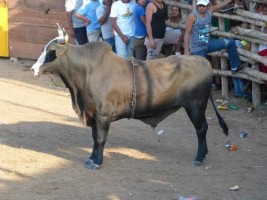 The basic plan for the bulls, toros, here is to introduce a hostile bull into the ring. To ensure real snorting taurine ferocity, the bull is given a few jolts with a cattle prod just prior to release. The bull charges out the door to face a large crowd of improvisados, amateur volunteer bull fighters: in essence, anybody who can persuade the organizers of their sanity and sobriety (I’m not convinced the evaluation is all that rigorous). The goal is to get as near to the beast as possible, even better to touch it, without getting gored or trampled. Some people succeed on both fronts, others not so much.
Broken humans are the order of the day, but deaths are uncommon. One gringo vacationing in Guanacaste decided to give it a try and barely survived a horn through the chest. He underwent hours of emergency surgery and spent weeks in recovery. Some of the improvisados dress up in costumes for the occasion – Batman, clowns, fuzzy colored wigs, capes, etc. There are a few professionals in the ring who help the injured hobble out. If they need to be carried out, there is an express medical window on the side of the ring. The stretcher can be passed directly into the medical support area. Bulls can achieve great fame by dint of their ferocity; killing somebody is a real career boost.
The big bull event of the year is called Zapote, after the district of San José where the ring is located. There is now a second ring on the opposite side of San Jose in San Antonio de Belén. They begin on the 25th of December and run to the 6th of January, Three Kings Day. There are afternoon and evening events, and they are all broadcast on national T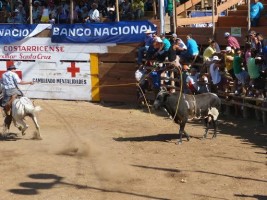 V. For a fee, you can have a personal message stream across the screen below the action. The rings are surrounded with food vendors of all sorts and they’re great places to forage for fiesta food.
One of the calmer parts of the toros I enjoy is watching the highly skilled horsemen rope the bulls when it’s time for them to exit. They take great pleasure in showing off their skill with a lasso. The ropes are often light in color and can be seen very clearly, especially in smaller bull rings.
About the Author
Jack Donnelly
Jack Donnelly has been a life-long enthusiast of Latin American folk culture. As a young man, during the 1960s, he studied cultural anthropology at the Universidad de las Américas in Mexico City. He went on to volunteer with the U. S. Peace Corps in Guatemala.
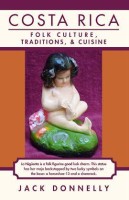
Now, Donnelly lives in Heredia, Costa Rica. He travels around the country investigating and documenting folkloric events. Donnelly is the author of COSTA RICA: Folk Culture, Traditions, and Cuisine which is available on Amazon in paperback and Kindle.



