


 SIGN UP FOR OUR
  Real estate investors are being urged to take advantage of the perfect storm of foreclosures in the United States. Investors in Costa Rica are giving up on waiting for the next housing bubble and are applying principles of value-based investing before making decisions. With a long-awaited housing market recovery in the United States and a sideways real estate market in Costa Rica, whose advice should be followed?
In early 2011, respected financial magazine Forbes published an article entitled “The Foreclosure Fallacy“, in which author William P. Barrett indicated that foreclosures in the languishing American real estate market were no longer “screaming bargains.” That article took an unusual contrarian view; after all, foreclosures and short sales in the United States have been a driving force of the unimpressive housing market during the last few years.
The crux of the Forbes article was that buying cheap does not always mean buying smart when it comes to foreclosures. While there are some true bargains to be found at the “courthouse steps” or sheriff auctions in the United States, there are multiple caveats to consider when purchasing a foreclosed property or pursuing a short sale. Few individual investors are finding success with foreclosed properties, particularly in the saturated markets of Florida, Arizona, Nevada (especially Las Vegas), the Inland Empire of Southern California, and other areas.
It is unreasonable to think of American foreclosures as sure-fire flipping investments, especially with a shadow inventory of additional foreclosures still to come and the possibility of further deterioration in the economy. One segment of the American real estate market that is performing well -rentals- is being aggressively pursued by institutional investors loaded with cash; this in turn is effectively shutting out individual real estate investors.
Value-Based Real Estate Investing
The value-based investing method being used in Costa Rica now makes a lot more sense than blindly investing in foreclosures in the United States. Too many investors in the U.S. are waiting for the next housing bubble, which could still be years away and might not live up to expectations. A bubble may not materialize in Costa Rica either, and thus investors are taking the following measures:
Studying prices objectively
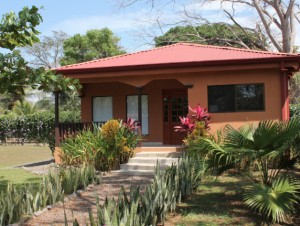
Real estate pricing in Costa Rica tends to be all over the place, but with enough field work, comparable prices begin to emerge in certain areas. Values can be 30 to 40 percent lower in some cases, as is the case with Casitas for Sale -one of our advertisers. Some of the homes they offer are priced under $50K, even though they are located near luxury resort-style residential projects where homes are priced for hundreds of thousands more.
Securing rental value
The meteoric rise in the prices of lodging and hotel accommodations around the world is driving travelers to sites like AirBnB, where they can look for rentals in places like Costa Rica rather than staying at expensive hotels. The savings realized by guests, many of them locals engaged in domestic tourism, are to their great advantage. For the landlord of the property in Costa Rica, it means making 15 percent or more on the lease amount and not having to worry about competing against crowded rental markets in urban areas.
Inflationary Concerns
The economy of Costa Rica thrives on inflation, as evidenced by the constant rising prices of consumer goods. As consumers are squeezed, the population adjusts and prospers accordingly. Inflationary concerns in the United States are handled differently, as it is a far greater consumer economy. Prices on items such as automobiles, electronics and appliances may be several times lower than in Costa Rica, but economists have agreed that such low prices can only last for so long.
The prices of consumer goods in America -including food- could accelerate in the near future, even as U.S. Federal Reserve Ben Bernanke expects that growth will outpace inflation. Martin Hutchinson of Reuters notes that real growth could be lower and inflation higher, thereby creating a situation in which investments -particularly real estate- could lose significant value. Real estate acquisitions made with value-based investing in mind tend to hold their value even under inflationary concerns.
The Location Advantage
Location has always been a tenet of the real estate markets, but even this tenet fails to explain the scores of empty homes just outside Las Vegas, or the ghostly condominium towers in Panama, or the imposing -yet desolate- luxury properties in Dubai. For some reason, beach properties in Costa Rica have managed to escape such ironic fate, and a lot has to do with the natural beauty of the country. Costa Rica is still very much sought-after by people in search of a good life, and we can expect it will remain that way for years to come.



