


 SIGN UP FOR OUR
 Washington, Oct. 14 — El Salvador came out on top last Friday in its long-running arbitration dispute with OceanaGold Corporation, a Canadian-Australian gold and copper mining company.
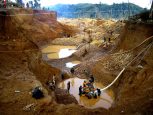
A gold mine in Myanmar, to give an idea of what even the beginning of such an operation looks like. Photo for illustrative purposes, source – Facebook.
The company had sought $250 million in compensation for a permit rejection based on environmental concerns by the impoverished Central American nation, the World Bank’s arbitration body said.
Salvadoran Attorney General Douglas Melendez announced the International Center for the Settlement of Investment Disputes’ (ICSID) unanimous ruling at a press conference in Washington, a decision that brings an end to a seven-and-a-half-year legal battle.
OceanaGold confirmed on its website that the ICSID had ruled in favor of El Salvador, and had ordered the company to pay the Salvadoran government $8 million to cover its legal fees and costs.
“We expect the mining company will accept this outcome and promptly reimburse us for that $8 million,” Melendez said.
OceanaGold inherited the arbitration dispute in November 2013 when it acquired Vancouver, Canada-based Pacific Rim Mining Corp.
Pacific Rim subsidiary Pac Rim Cayman LLC filed an arbitration claim against El Salvador before the ICSID in 2009 after the country refused to issue a permit for the El Dorado gold mine in the northern province of Cabañas.
The mining company said it was denied future profits as a result of the permit rejection and filed an initial claim seeking $77 million in compensation.
That figure later rose to as high as $314 million before falling to $250 million, Luis Parada, one of the attorneys representing El Salvador, said at the press conference.
Pacific Rim began operating in El Salvador in 2002 but the Salvadoran government later rejected its request for a permit to develop the El Dorado mine.
That decision came amid a freeze on permits for precious metal mining exploration and development instituted by then-President Antonio Saca on the grounds those operations could contaminate the nation’s scarce water basins. EFE



