


 SIGN UP FOR OUR
 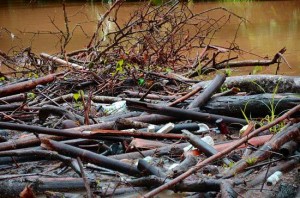 In early May, neighbors of Barrio Goban near downtown Limon in the Caribbean Zone of Costa Rica complained to the municipality about an unsightly garbage problem in the Chocolate River. Roberto Portuguez of La Prensa Libre described the situation:
“Food, dead animals, garbage bags, discarded appliances, and even construction debris are turning the river into a dump where the stench is permanent.”
Mr. Portuguez interviewed exasperated neighbors who explained that people from outside of their community arrive to dump trash in the river, and the municipality takes too long to clean it up. The dumping has turned into a river dam made of garbage, which makes the water level increase and overflow during heavy rains.
Earlier this week, the Ministry of Health shut down an illegal dumping site in Siquirres, a canton also in the Limon province but closer to Cartago. The site is being leased by the municipality for dumping operations, but waste management takes too long to handle the garbage deposits, and now the aquifer has been contaminated and dead fish are turning up in a nearby river. To make matters worse, three dump trucks are out of order, and the canton has no funds to repair them because the comptroller did not approve a budget last year.
The problem in Siquirres has been closely followed by Diario Extra. The problem is not limited to the canton of Siquirres. For years, all cantons in Limon have been waiting on a project that will take their refuse to a landfill and waste management center in the Tomatal sector. The landfill has been operational for two years, but the operation remains sketchy. The project cannot work efficiently unless there are regional processing centers in each major town, and the trash must be hauled away by railroad cars. These two requirements are not in place.
In the meantime, the accumulation of garbage keeps growing in sectors of Limon along with the number of tourists -depending on who in Costa Rica is providing the information.
In September of last year, some news reports about Limon painted a picture of despair. The port infrastructure was described as being only slightly better to that of Port-au-Prince in Haiti. The president of the National Chamber of Tourism, Juan Carlos Ramos, expressed his concern that Limon would lose tourists unless the garbage went away, the port facilities were improved, and more hotels were built.
That was last year as the season was getting started. In the end, the Costa Rica Board of Tourism (ICT) reported the arrival of about 300 cruise ships, an increase from the previous year. Two hotels in Punta Uva were demolished due to being located in ecological reserves, and cleanup of the demolition site has begun. As more tourists arrive, more reports of garbage trickle in. The picture in this article, for example, was taking by a passenger of the MS Zuiderdam cruise ship operated by Holland America.
With all the garbage assailing the communities of Limon, one would think that tourists would flock to social media and tell other tourists to stay away from Limon, but that is not the case. Could the garbage accumulation have something to do with the increased number of tourists? A posting on the popular tourism review site TripAdvisor offered an explanation about his experience living in Costa Rica, specifically in Puerto Viejo:
One thing else I discovered in these developing countries… Garbage is new for many of them. Locals told me when you went to work, rice and beans were wrapped in banana leafs and tied with twine. Drinks were water or coconut water. All materials were organic and they just threw them anywhere.
Now, you can see in all the stores the introduction of processed food and everything in containers. The city and the country is struggling with ways to deal with the increasing amount of waste.
Another reader provided the following insight:
Dealing with garbage is a difficult issue for any municipality anywhere in the world these days.
It’s especially difficult when there is an “ebb and flow” of tourists who add to the mix. During times such as Semana Santa (Easter week), it’s almost impossible to keep up!
The garbage problem is not limited to the province of Limon. Two other provinces that have experience the most growth in terms of visitors and relocation by expatriates are Guanacaste and Puntarenas, and it wasn’t until 2008 that waste management authorities began to realize that trash was accumulating faster than the population was growing.
What’s interesting about all this is that Limon is the province that produces less garbage per capita in Costa Rica, just 0.65 kilograms per day compared to 0.95 kg per day in the province of San Jose. In fact, 40 percent of all 11,000 tons of garbage produced every day in Costa Rica is collected in San Jose. Alajuela produces 17 percent of all garbage, followed by Guanacaste with 13 percent.
Limon is the province that produces the least amount of garbage, but only 67 percent of it is collected properly. Meanwhile, Limon is the only coastal zone in the country that reports an uptick in real estate development and new construction -amid all that trash.



