


 SIGN UP FOR OUR
 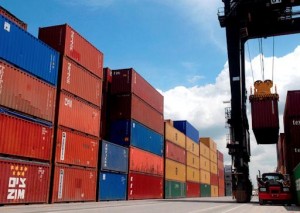 This past Thursday Chinese officials informed the local government that the 250 new patrol cars that they had promised back in early 2011 had finally arrived. The vehicles were delivered personally by Chinese ambassador Li Changhua to the Minister of Public Safety Mario Zamora. As of right now the vehicles are being held in the ALFIPAC fiscal warehouse located in Caldera, Puntarenas. The Chinese ambassador stated that it was an honor for the government of his country to contribute to the safety of the Costa Rican people through this donation. “We are convinced that the Costa Rican Ministry of Public Safety has fully benefited from our contributions” said Changhua.
Minister Zamora thanked the Chinese government and stated his satisfaction at the decrease of felonies such as rape, robbery, homicides and family violence during the last year. Zamora said that this was a result of a renewed effort towards national security. He also explained the Ministry of Public Safety is planning on spending an extra ¢16.000 billion on new patrol cars in order to further reinforce police presence throughout the country. This will be part of his initiative to reduce police response time to 15 minutes. In addition to this the Police Force’s numbers will be bolstered with over a thousand new recruits who have received updated training.
The new vehicles are identical to the ones that the Chinese had donated back in 2009. All first generation Mazda 6 models, each one with a two thousand cubic centimeter engine, four doors and full extras. The patrol cars were built by the FAW group and were valued at ¢16 million Colones (roughly $31,500) each. These cars were heavily criticized during 2010 and 2011 due to the fact that less than a year after they were first put on the streets 6 out of 10 were out service. The biggest problems were caused by malfunctions in the gear box and the hydraulic pump. Another common problem was that if a part broke or was damaged the Police Force had to wait for a new part to ship in from China. At times the wait could extend well over a month.
The new automobiles will be divided into 200 for use by the national Police Force and 50 for the division of Traffic Control and Safety. According to Erick Lacayo, Director of the Police, the number of patrol cars each region receives will vary according to its specific needs. Sub-director Randal Picado further explained that if an officer is involved in any kind of accident with one of the vehicles and it is proven to be his fault, a due process will be opened against him.
The Chinese Government has also pledged to donate $20 million towards the creation of a new police academy in Pocci of Limon. This donation will not be given to Costa Rica in cash but rather in the same way as the National Stadium. The materials will be imported from China and the structure will be built by a Chinese workforce. Zamora has stated that he expects the construction to begin very soon.
All of these contributions are a result of the diplomatic relations between China and Costa Rica that have been blossoming since 2007.
Costa Rica and China a New Found Friendship
Back in 2000 an alliance between Costa Rica and China was highly unlikely. The Central American nation had a strong friendship with the island of Taiwan and its relationship with China was minimal. But all of that changed within 7 years. China steadily climbed to the number two position of Costa Rica’s main traders, right behind the U.S. Costa Rican exports to China increased by an annual average of 37% while Chinese imports grew by 29%.
When former president Oscar Arias was reelected in 2006 he saw in Beijing the opportunity to create a formidable ally for his country. He immediately started to work on strengthening ties with the Asian nation. Finally, In June 2007 Arias announced his decision to cut all ties with Taiwan and embrace China as a new partner for Costa Rica. The president described his choice as “an act of foreign policy realism which promotes our links to Asia. It is my responsibility to recognize a global player as important as the People’s Republic of China”. At the time this move sparked speculation that it would create a “domino effect” in the rest of the Central American Nations. However, six years later none of the six other nations in the isthmus has followed suit. A possible explanation for this is that China has focused in creating a model relationship with Costa Rica in order to make a positive impression in the rest of Central America.
This decision also generated some criticism in regards to charges that had been made against the Chinese in recent years due to unfair trade practices. “China is not a partner of trust in trade matters,” commented Luis Obando, a trade advisor at Costa Rica’s Chamber of Industries. “China has been fined by the World Trade Organization countless times.” Accusations include concerns of product safety and unfairly low prices. Arias drew more criticism when he denied the Dali Lama’s visit to the country in 2008 in order to avoid damaging the newly formed alliance with China. Local Buddhist groups deemed this an act of religious intolerance, claiming that the Dali Lama’s visit was a religious event and not a political one. They also accused Arias of being an opportunist due to the fact that he had given a speech during the last visit by the religious leader in 2004 where he had complimented him for his work.
After this the bond between Costa Rica and China only got stronger. In exchange for breaking all ties with Taiwan, China bought $300 million in Costa Rican bonds with money from their considerable foreign exchange reserves. In addition, the Asian nation also agreed to provide $130 million in aid to the Ticos (this included police vehicles and equipment which, previous to the partnership between the two nations, used to be provided by Taiwan); as well as the creation of a scholarship program for Costa Rican students who wished to further their studies abroad. At the same time Costa Rican officials started working hard on facilitating the Visa process for Chinese tourists who wished to visit the country. However, the biggest contribution came in the form of a new National Stadium built on The Sabana Park in San Jose. The “Estadio Nacional” is estimated to have cost around $100 million and sits 35,000 people (1% of the population). Its construction began on March 12, 2009 and finished in 2011.
The culmination of this growing friendship was a Free Trade Agreement (CFTA) between the two nations that was signed on June of 2011. The CFTA makes it possible for local exporters to sell more than 4,000 products to Chinese buyers. Some of the major items that Costa Ricans hope to export include electronic components, leather, fruit juices and decorative plants and flowers. The treaty also makes it possible for goods that are not being produced yet to be exported in the future.
Future plans include $6.2 billion in infrastructure improvements for Costa Rica as well as Biotechnology research, cultural exchanges, and other scientific ventures.



