


 SIGN UP FOR OUR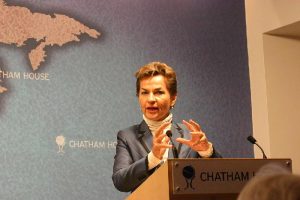
Wikimedia Commons
12 July 2016 – Continuing a series of ‘firsts’ regarding the selection of the next United Nations Secretary-General, candidates for the world’s top diplomatic post will this evening participate in a globally televised and webcast event in the UN General Assembly Hall, where they will take questions from diplomats and the public at large.
Christiana Figueres, the candidate from Costa Rica and leading COP21 figure, is expected to participate after her formal presented before Assembly Hall this week.
The event, Leading the United Nations: A Global Townhall with UN Secretary-General candidates, will be held from 6.00 p.m. to 9.00 p.m., New York time, and be webcast and broadcast live by UN TV and Al Jazeera Media Network across multiple broadcast and social media channels.
The Townhall follows the landmark informal briefings that began in mid-April, kicking-off the process to select the official that will succeed current UN chief Ban Ki-moon when he leaves office at the end of the year. During those hearings, candidates went before the General Assembly to present their respective ‘vision statements’ on the challenges and opportunities facing the UN and the next Secretary-General, and answered questions from the audience.
These first-ever briefings were mandated by the Assembly and are distinct from the townhall-style event taking place later today. They will continue to be held as further candidates are presented. The next informal briefing will be Thursday, 14 July, when the most recently-nominated candidate, Christiana Figueres (Costa Rica), will take her turn.
Ahead of the Townhall, General Assembly President Mogens Lykketoft said: “In the past, UN Secretaries-General have been chosen behind closed doors. This time, we want to ensure all UN Member States, and the entire world, have a chance to know who the candidates are, what their vision is and see how they perform.”
Ten of the 12 official candidates, nominated by their governments, will be engaged in a wide-ranging 60-minute discussion about the challenges and opportunities facing the organization. They will each be given the opportunity at the start to make their case for the job and explain their vision.
“This Townhall is another way to enhance public interest in the mission and work of the United Nations and the need for the best possible candidate for our next Secretary-General,” added Mr. Lykketoft.
The General Assembly Hall’s 1,900 seats are expected to be filled to capacity with ambassadors, diplomats, UN staff, journalists and leaders from business and civil society. UN-accredited journalists are also invited to film and record from the media booths.
The 10 confirmed candidates will be split into two groups of five (determined by draw of lots) for a one-hour discussion and question-and-answer session led by moderators James Bays and Folly Bah Thibault from Al Jazeera English. Questions to the candidates from Member States and the global public will come from the floor and via video from around the world.
First group: Vesna Pusic (Croatia), António Guterres (Portugal) Susana Malcorra (Argentina), Vuk Jeremic (Serbia) and Natalia Gherman (Moldova);
Second group: Helen Clark (New Zealand), Danilo Türk (Slovenia), Christiana Figueres (Costa Rica), Igor Lukšic (Montenegro) and Irina Bokova (Bulgaria).
The two candidates unable to attend the event in New York are Srgjan Kerim (Former Yugoslav Republic of Macedonia) and Miroslav Lajcák (Slovakia). However, both have been invited to send video messages that can be used in the event.
Both UN Television and Al Jazeera will provide broadcast feeds and UN Web TV will stream the event live online and on mobile devices at webtv.un.org. Al Jazeera will broadcast, stream and report across its global broadcast and digital platforms.
The Costa Rica Star is pleased to bring our readers the vision of Christiana Figueres in her candidacy:
If appointed, my time in office will be guided by:
Collaboration: Many of our toughest challenges extend beyond national boundaries and are global or regional in scope. In an age of global resource scarcity, we are becoming not only more interconnected but more intricately interdependent. To address this we need a new model of collaborative diplomacy. The gain of some can no longer come at the expense of others.
The Paris Agreement has taught us the fundamental importance of respecting national circumstances, needs and interests. But it has also taught us that we can honor national priorities while finding ways of joining efforts for the common good, and focusing on our common humanity.
Integration: At its birth last century, the UN’s strength rested on the three main pillars of its Charter: peace and security, human rights, and development. In this century, its strength must be built on the integration of these three pillars – such that success in one fosters success in the others.
Without stronger mechanisms for managing critical cross-border issues, including resource management, refugees, and migration, we will not build the shared security needed to support everyday practical cooperation.
Without adequate restrictions on the proliferation and use of weapons, we will continue to see growing displacement and inequalities generated by conflict and violence.
Without climate stability there will be no food or water security, reducing our ability to remain in our communities, towns and countries.
Without securing women’s rights to education, land ownership, and political participation, we will not see a rise in equitable economic development.
Without building more resilience to natural disasters, we will not create the economic or political space to plan for long term development.
Without respect for human rights, citizen participation, and reduced corruption, we cannot build the conditions for a sustained peace.
For these reasons and many more, integration will be fundamental in our increasingly intertwined world.



