


 SIGN UP FOR OUR
 After living in San José for almost all my life (30 years) I decided that it was time for a change. I was tired of being in traffic jams for hours, breathing all the smoke from the cars, listening to people honking about everything, fighting for parking space at the shopping mall and all the stress that cities bring with them.
I started to look for a job in the area of Guanacaste and I found a position in a hotel around the Papagayo area. I told my girlfriend that we will move to a hotter place but without that many people and cars and she was happy about it, who doesn´t want to live at the beach?
Before we moved, we started to think about our budget and how much the cost of living is in Guanacaste. It is very common to hear that living in touristic areas is more expensive than to live in the city and I am going to share my thoughts about it.
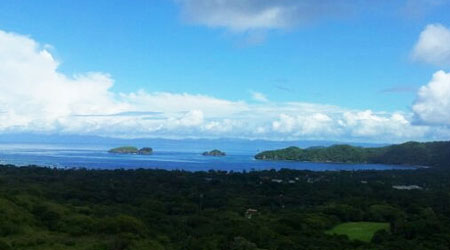
View from Hotel Vista Azul Playas del Coco
Let´s start with rent. In our case we were looking for an apartment with 1 or 2 rooms, nothing too big since it is just the two of us. In San José I was paying almost $400 for a 1 room unfurnished apartment including cable and water about 20 minutes from the city. This price is average for San José, you can even find houses to rent around $400 to $500 a month depending on the location and size of the house.
In Playas del Coco, I found different prices because of the different ways of living. There were luxury condos in Playa Hermosa for $1500 a month, very nice condos in Coco for $800, or a simple humble house in local neighborhoods at $290 a month. Many apartments are on average $500 a month with 2 bedrooms and $300 for a very small studio. In our case, we found a nice 2 bedroom apartment for $400 a month (1 year contract) including water, security and 7 different pools. It took us a fair amount of time to find a place that fit our needs because we were looking at the beginning of high season when all the rates are higher. It is always important to do some research because many complexes have multiple property managers and therefore their own pricing, but if you can find a way to contact the owner directly you have a higher chance of getting a better deal.
Another important point is that it depends on whether it is high or low season because in high season most of the apartments are rented and they will charge a higher rate since they know that there are tourists who will pay that higher price. In rainy season when many of the tourists have left, they need to fill those apartments and will offer it at a lower price.
Therefore, in regards to renting and finding a place to live, there is not a huge difference between the beach and the city. It just depends on what kind of living standards you have and how much you are willing to pay for it.
Something that goes along with the cost of living is your salary and in this aspect I have to say that for every job available in the beach areas, there are ten times more in the cities. Most of the jobs at the beach are related to tourism or the fishing industry and due to the fact that business goes by seasons, jobs are not available year round. Some places close for low season or cut their employment because there is just not enough business throughout the rainy months. City wins all the way in this aspect. You can make more money in the city and it is easier to find a job than in beach towns.
I have to say that food and house supplies are 5% to 10% more expensive than San José and that includes meat, fruit, vegetables, and household basics. Here in Playas del Coco you can go to Automercado and find a lot of imported products because there are some tourists that prefer to buy the same things they find at home than to buy local brands. This makes the prices increase significantly because the market knows there will always be tourists that will pay that price.
There are some local farmer’s markets around where you can get fruit and vegetables at good quality but it is not that much cheaper than going to the supermarket. To compare, at the farmer’s market at San Isidro (about 20 minutes from San José), you can buy 6 kilos of tomatoes for 2000 colones ($4) but that is impossible here in Guanacaste.
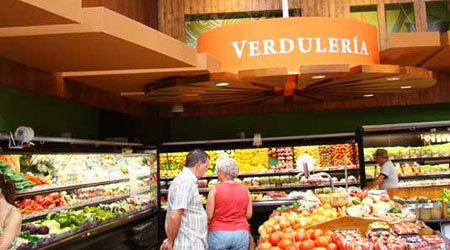
Automercado Playas del Coco
I have noticed significant differences between supermarkets in Guanacaste however. An Imperial beer in Automercado cost 715 colones and if you cross the street to the Super Luperon, you get the same beer for 645 colones. Many of the items at the supermarket are around the same price but sometimes you will find that certain items are significantly more expensive at one market than others. When I need to buy basic supplies I prefer to go to Maxi Palí in Sardinal. Although they don’t have too much selection, their prices are much cheaper.
Restaurants in tourist parts of Guancaste are also more expensive than the city. In San José my favorite gallo pinto place costs about $4 for a big plate of pinto and meat and in Coco, one plate of pinto and meat costs about $6 dollars depending on if you go to a soda or a restaurant. Prices for eating out greatly reflect the tourism industry, no matter what the average salary of a worker is.
If you have kids and want to send them to private school (elementary to high school), the starting rate is around $350 per child per month and rates change depending on how many children you send and their age. This is the same for the beach and the city.
When it comes to electronics, the price in Coco are significantly greater, about 10% to 20% more than San José. There is just one computer shop in Playas del Coco and they do have a decent selection but if you can’t find what you need, you will have to check Liberia or sometimes even San José.
Overall, I will say that the general cost of living in the touristic areas in Guanacaste are a bit higher but on the other hand, you don´t spend the same amount of money that you would in the city. There are less stores and shopping malls here and once you become a local, you don´t spend money on tours or at least pay for any tourist activity at full price.
In the end, it depends on your standard of living and spending habits but despite the slightly higher prices, living at the beach comes with many benefits: lots of nature and an easy going life.
Guest post by mytanfeet.com
About Mytanfeet: Blog created by a couple living in Costa Rica. They provide information about the country, beaches, cities, life in Costa Rica, other countries in Central america and more. For more information check out their website.



