


 SIGN UP FOR OUR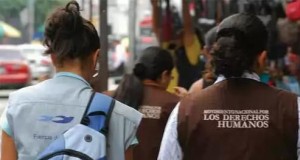
A Member of the Nonviolent Peaceforce and a Human Rights Worker in Guatemala. Source: nvpf.org
Eduardo Ulibarri, Ambassador of our country’s Permanent Mission to the United Nations, attended a high-level briefing in Minneapolis, MN earlier this week related to discuss the concept of peacekeeping forces that involve the contribution of civil society to the unarmed protection of civilians during periods of conflict.
Costa Rica fully supports Nonviolent Peaceforces and is committed to their advancement.
The briefing was attended by the Permanent Missions of Belgium, Benin, the Philippines and over 100 civil representatives from different nations. The concept of a non-violent peacekeeping force began in 1999, when pacifists David Hartsough and Mel Duncan met during the Appeal for Peace conference at The Hague in the Netherlands.
Hartsough is a member of the Religious Society of Friends (known as Quakers), who has been involved in peaceful protests and activism since the Civil Rights movement against segregation in the United States during the 1960s. He has also protested against the Vietnam War and nuclear proliferation. During the Balkans War in the 1990s, he traveled to Kosovo and trained civilians in unarmed and non-violent conflict resolution.
Mel Duncan’s work with the coffee and cotton brigades in Nicaragua at the height of the proxy conflict fought between the major Cold War powers in the 1984 led to a careful observation that farming villages were not attacked when foreigners were present.
The Work of Nonviolent Peaceforces
When the United Nations is compelled to enact a peacekeeping force due to armed conflict or extreme civil unrest, different nations contribute detachments of their own armed forces to take part in peacekeeping operations. While UN peacekeeping forces are not directed to fight or engage in combat, they often encounter hostilities and respond accordingly. Members of UN peacekeeping forces can be recognized by their iconic blue helmets and armbands.
A Nonviolent Peaceforce differs from the traditional UN peacekeeping forces in the sense that they are made up of unarmed civilians. These forces are tasked with protecting the population of a region during conflict, but they do so by practicing the noble art of unarmed conflict resolution -principles advocated by Mahatma Gandhi.
At the briefing in Minneapolis Mr. Rafael Seguis, the Under-Secretary of the Philippine Department of Foreign Affairs, explained the concept of Nonviolent Peaceforces as “a unique model of unarmed civilian protection that directly engages civil society groups doing peacekeeping work, and taps into their knowledge, experience and manpower.”
Nonviolent Peaceforces are currently deployed in many hotspots around the world. In the new country of South Sudan , there are currently 65 unarmed civilian peacekeepers in eight locations, including areas affected by Joseph Kony and the Lord’s Resistance Army.
Sources: PR.com and the official site of the Nonviolent Peaceforce.



