


 SIGN UP FOR OUR
 By Wendy Anders
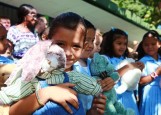
Costa Rican school children, Wikimedia.
Costa Rica’s government initiated a program to subsidize children under the age of 18 to help them stay in, or re-enter, the educational system.
A budget increase of CRC375 million (US$688 million) was allocated for this specific initiative aimed at eradicating child labor, and thus reduce poverty, stated the Ministry of Labor and Social Security (MTSS, its Spanish acronym) yesterday in a press release.
In an agreement signed between the Labor Ministry and the Joint Institute for Social Aid (IMAS, its Spanish acronym), the IMAS will be responsible for assessing cases of poverty and extreme poverty, and for referring potential beneficiaries to the Labor Ministry’s Office for Protection of Child and Adolescent Workers.
Labor Minister Carlos Alvarado Quesada said, “We have a country committed to eliminating child labor and the worst forms of adolescent work, and this agreement undoubtedly represents a proof that we are on the right track.”
“Actions like this with children facing risk situations are essential for building a more just and inclusive society. This population needs the support of the state now,” said Vice President Ana Helena Chacon.
The program will provide a monthly cash subsidy to family’s of children, adolescents and young workers under 18 who are living in poverty or extreme poverty, or are otherwise at-risk, vulnerable or socially excluded. The subsidy will contribute to meeting the basic needs of the family, and to pay for educational expenses so that the beneficiaries can reenter and remain in the educational system, said the Labor Ministry.
The child labor eradication program launched today with the IMAS granting subsidies to 31 people thanks to resources allocated by the Fund for Social Development and Family Allowances (Fodesaf, in Spanish).
The regional presence of the IMAS will allow for a close and effective coverage by the program of the country’s young population, said the Labor Ministry, and for an agile and timely allocation of resources.
The program is supported by the Presidential Social Council, coordinated by the country’s Vice President, as part of the National Strategy for Poverty Reduction called “Bridge to Development.”



