


 SIGN UP FOR OUR
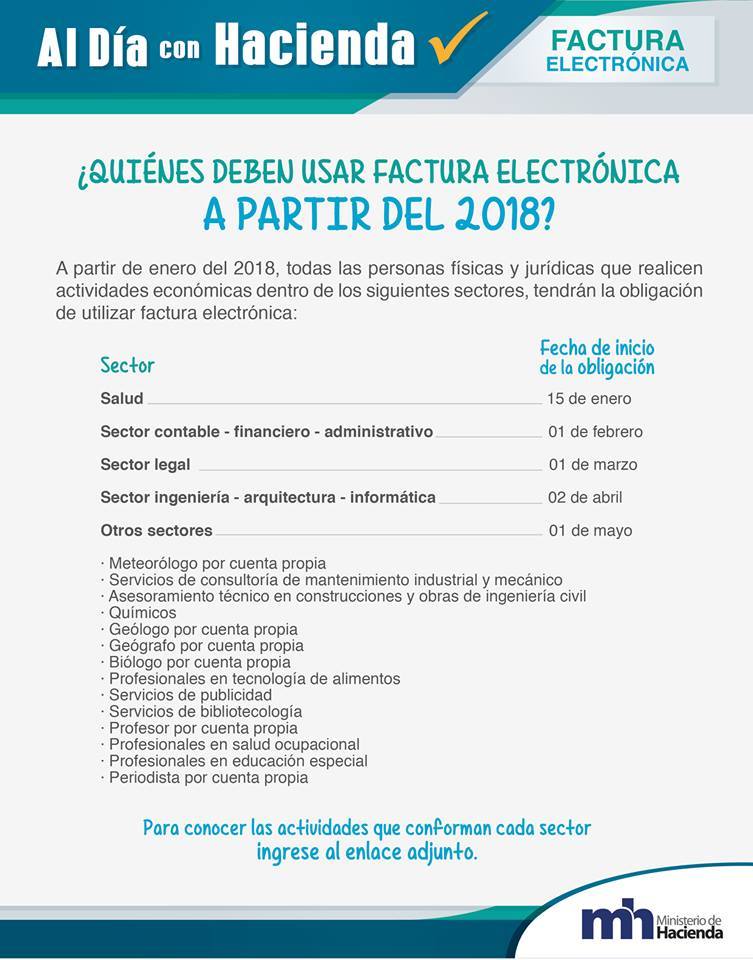
Costa Rican Treasury (Ministerio de Hacienda) reminded individuals and corporations of the health sector that as of January 15, 2018 they will have the obligation of using electronic invoices.
This is the first group that by law will have to start implementing this system; the second group is the accounting-financial and administrative sector that will have to use electronic invoices as of February 1, 2018, followed by lawyers starting March 1st; engineering-architecture and technological sectors as of April 2nd and the rest by May 1st, 2018.
The electronic invoice allows Treasury to have real information of the amount of the sale or service to have better control and calculate the income tax according to verifiable data. In other words, it’s a method to avoid tax evasion from independent professionals and corporation which many times do not report the real amounts they have charged.
The electronic invoice is generated when a sale of goods or services is completed and it is delivered to the consumer electronically. Treasury has state that the system also presents advantages for the contributors by saving in paper, storage space, making the administrative processes more efficient and also providing records and complete financial information.
Companies can choose their provider for the electronic invoice as long as they fulfil certain requirements that Treasury has already established. Treasury is also going to offer their own tool for contributors to use, but due to particular delays the same will not be available probably until February.
Contributors also must register online in the Ministerio de Hacienda website.
This January 15 the measure is obligatory for all physicians who provide private consultations, psychologists, health services, dentists, hospital activities, clinics, medical centers, private hospitals, alternative medicine, radiology services, medical laboratories, private ambulance services, veterinarians, veterinary services, nutritionists, physiotherapists, among others.



