


 SIGN UP FOR OUR
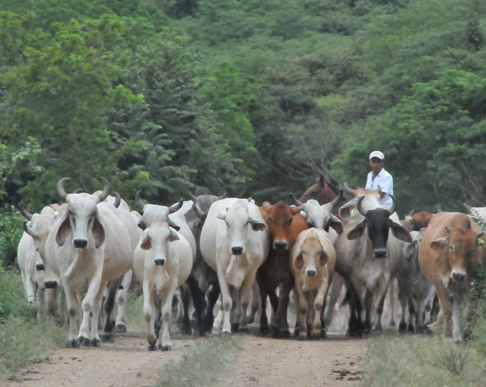
To strengthen the country’s national strategy on low carbon livestock (a program referred to with the initials ENGBC in Spanish), the Ministry of Agriculture and Livestock (MAG) and the National Institute of Learning (INA) have joined to enhance the country’s sustainable livestock production with more resources.
Mauricio Chacón Navarro, manager of the national livestock program and coordinator of the ENGBC, said that on June 1 an agreement was signed to allow greater technical and economic resources to be dedicated to the INA at the national level to ensure the standardization of low carbon technologies, and work towards common national goals.
Among the priority themes in the national livestock strategy are: systems of rational grazing, silvopastoral systems, improved pastures, genetic improvement, adaptation to climate change, supplementation, silage, rational use of natural resources, management and use of slurry, and others.
“It will be easier to access the services of INA and its content will be aligned with what is promoted. There will be a standardized technical message to promote the country’s vision of the national livestock sector,” said Chacón Navarro.
The agreement with INA will strengthen technical assistance to micro and small businesses to overcome their deficiencies and take better advantage of market opportunities, among other benefits.
According to Chacón, there are 26 thousand farms whose primary activity is livestock in Costa Rica.
A recent study by the School of Agricultural Economics and Agribusiness at the University of Costa Rica revealed the large contribution of cattle farming to the country’s economy, through a high level of linkages generated by this sector, giving aggregated value mainly in rural areas of Costa Rica, and being the largest generator of employment in the agricultural sector, said Chacón.



