


 SIGN UP FOR OUR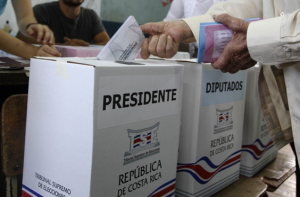
Voting for the 2014 presidential elections in Costa Rica
Democracy is very much alive in Costa Rica. Such was the impression perceived by the Costa Rica Star as well as international observers of the Organization of American States (OAS) on Sunday, February 2nd, 2014. Although candidate Johnny Araya of the powerful National Liberation (Spanish initials: PLN) initially captured the majority of the votes, he later lost ground and came up short of the requisite 40 percent electoral margin. As it stands, the former Mayor of San Jose will face candidate Luis Guillermo Solis of the leading Citizens’ Action Party (Spanish initials: PAC) in a close second round of voting on April 6th.
The true winner in this election was the constituency, who showed the world that Costa Rica embraces, respects and appreciates every aspect of peace and freedom under democratic rule. The sheer enthusiasm of the electorate can serve as an example for Latin America and the entire world to embrace.
A Festive Democratic Event
It was a festive day for the entire country. In the early morning hours, the Costa Rica Star visited the Eduardo Pinto Hernandez elementary school in Tacares de Grecia, a small rural town in the province of Alajuela. In this sleepy town of sugar cane and coffee plantations, there were not too many early voters around 8:00 a.m., but everything seemed to be running smoothly. Elections supervisors and volunteers from major parties such as PLN, PAC and Broad Front were on hand at 6:00 a.m., and they were eager to assist citizens to exercise their treasured right to cast their vote.
Elections officials in Tacares explained that voters would not be showing in force until after Sunday Mass and brunch. The Costa Rica Star then headed north about 9 kilometers to Grecia, a small city that enjoys high quality of life. In 1989, Grecia was voted the cleanest city in Latin America by an international caucus of municipalities, and on Sunday the city looked as if she was ready to earn that distinction once again. Expats have been discovering this prosperous city and its surrounding rural districts over the last few years, and they seem to gather at two main spots in downtown Grecia: Cafe Delicias and the BRO tavern.
The political atmosphere in Grecia was a lot more vibrant than in Tacares. At the party offices of National Liberation, volunteers distributed flags, fliers and t-shirts as they assisted voters heading to the polls. Small political rallies accompanied by improvised marching bands formed in key spots around downtown Grecia. It is important to note that political party volunteers who assemble at the polls and voting sites in Costa Rica will assist all voters -even those who expressly pledge allegiance to a different party. To this effect, the red, white and blue colors of the national flag began to outnumber the political party flags by late afternoon.
OAS observers interviewed by national broadcaster Radio Columbia 97.8 FM were pleased with what they saw and experienced at various Central Valley polling stations. An observer from Ecuador expressed that:
“This is a civic and democratic party. Everything runs smoothly, and the only complaints I’ve heard are that the music is too loud and that traffic slows down when going past the improvised rallies. These are actually great complaints since they underscore the festive mood of the elections.”
Children in Costa Rica Learn About Democracy
For some voters in Costa Rica, this Sunday was chock-full of festivities: Mass was followed by early dim sum at Chinese restaurants to celebrate the Year of the Horse, then it was off to the polls and finally home or to a sports bar to watch the chilly Super Bowl XLVIII that saw the Seattle Seahawks obliterate the Denver Broncos of the United States National Football League (NFL).
It was a party for children as well. At the National Children’s Museum in the lovable city of San Jose and at the Chinese-built National Stadium in La Sabana, young Costa Ricans between the ages of 2 and 15 learned about the crucial value of democratic elections by casting their votes on tablet computers. These educational electronic ballots, which might one day be used in all polls, were virtual mirrors of the actual elections.
More than 7,000 children cast their allegoric votes, which were mostly aligned with the way their parents and guardians voted. For some children, this was their second time voting. OAS observers were certainly pleased to see this educational and fun activity taking place alongside the general elections; President Laura Chinchilla visited the Children’s Museum and remarked that Costa Rica is one of the few nations that holds such events.
Smooth Elections and Democratic Access for All in Costa Rica
The Costa Rica Star learned about two potential issues at the polling stations: A man in Liberia, province of Guanacaste, had his vote nullified by station supervisors; early reports from this situation indicated that the voter is in his 40’s, has Down syndrome, and may have requested assistance typically given to people with disabilities, the elderly and those who have difficulty reading. The other issue came from employees at a business in the Central Valley whose employer allegedly did not give them enough time to exercise their right to vote. Officials from the Supreme Electoral Tribunal (Spanish initials: TSE) were still investigating both complaints on Sunday night.
The TSE was busy monitoring elections in remote areas of the country as well as in prisons. Unlike countries such as the United States, where those convicted of felony crimes are stripped from some of their civil rights such as voting, all citizens in Costa Rica are constitutionally protected when it comes to the democratic process. The imprisoned and the convalescent in hospitals also have the right to vote, and the TSE makes sure that they are able to do so.
At a time when violence, fraud and gross misconduct have marred presidential elections in nations such as Bangladesh, Thailand, Egypt, Honduras, Kenya, Iran, Zimbabwe, and others, the democratic process in Costa Rica is certainly inspiring. The recent developments in Nicaragua with regard to constitutional amendments that could keep President Daniel Ortega in a virtual dictatorship also underscore Costa Rica’s refreshing democratic stance in the region. This was the first time Ticos abroad were able to vote directly from their consulates and embassies, so the message was made clear around the world: Peace, freedom and democracy are the way of life in Costa Rica.
Freedom of the press was also read in the news media reports (in Spanish) on the election from various sources around Costa Rica.



