


 SIGN UP FOR OUR
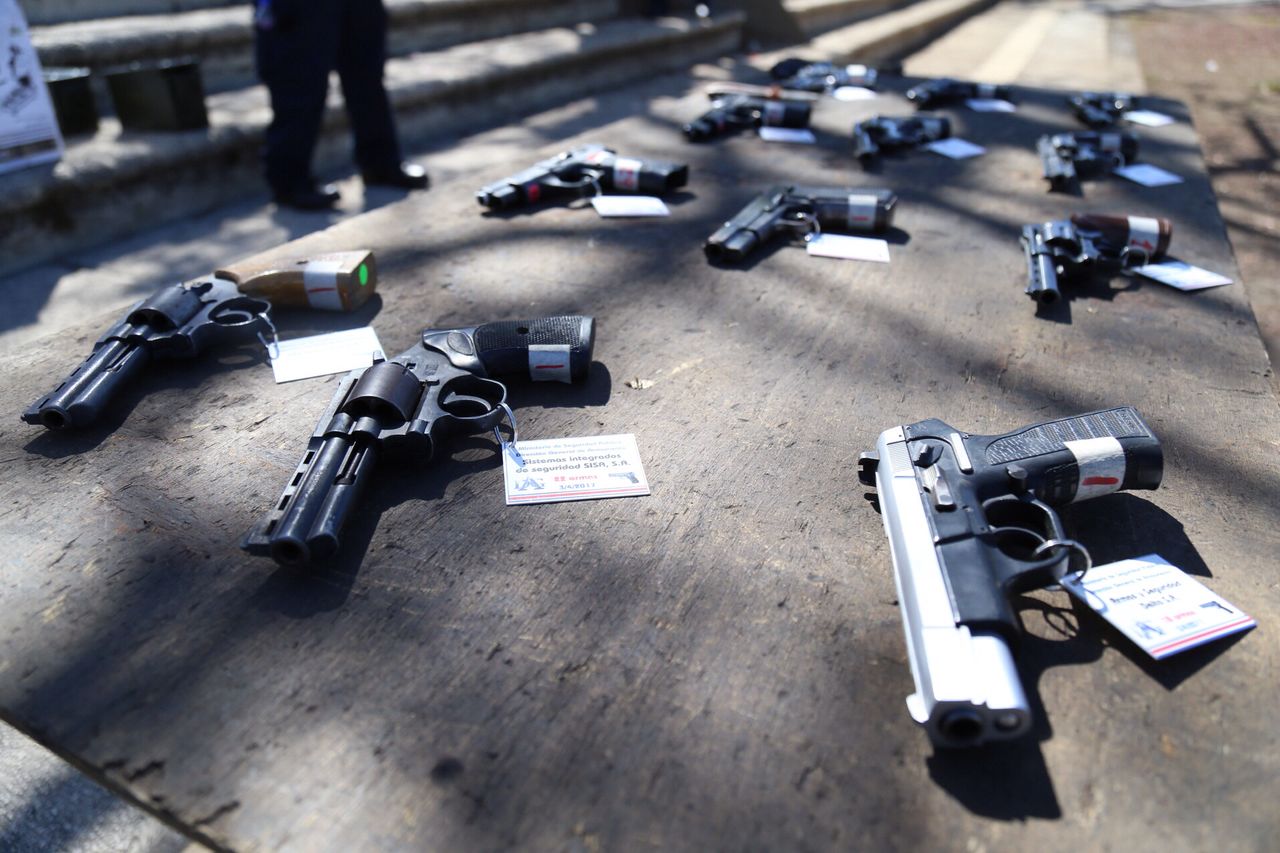
In recent months, the Public Security Ministry has destroyed 450 arms which were decommissioned by state agencies who are decreasing their use of armed guards, said Roberto Méndez, head of the private security bureau within the ministry, in a phone interview
As the ministry takes steps to comply with international arms control mechanisms, they are also looking for ways in encourage alternative security methods and implementing other safety practices.
All weapons in Costa Rica in addition to being registered upon entering the country, will all eventually have a secondary code which will allow them to be tracked if they fall into the wrong hands. The process began last week with a laser marking technique with equipment on loan from the United Nations. Costa Rica was able to code 482 arms in a week. But there is still a long ways to go.
With at least 30,200 weapons registered in Costa Rica, the country will be purchasing its own laser marking equipment once funds from the new “Sociedad Anónima” tax that were recently approved to generate funds for police enter the ministry’s coffers sometime after July.
The laser on loan from the UN will only be used to mark 1,000 arms, said Méndez, as the procedure goes through this trial phase and a special unit is trained in the laser marking.
The program is being carried out under the auspices of the United Nations Regional Center for Peace, Disarmament and Development in Latin America and the Caribbean, and aims to improve countries’ abilities to trace the origin and movement of weapons in order to prevent them from getting into the hands of criminals.
The laser marking procedure records directly onto each weapon a code that includes the country code, the year of registration, and a code for the security company who owns it. The code is virtually impossible to remove, said Méndez.
The plan also seeks to further Costa Rica’s compliance with the 1997 Inter-American Convention Against Illicit Firearms Trafficking, a protocol to which Costa Rica is a signatory.
The ministry has a program to provide safety catches to private security firms to increase safety while loading and unloading weapons, said Méndez; and also recently providing a training to Costa Rican customs and postal workers on detecting weapons in packages and shipments. The German government provided assistance for the training.
Costa Rica has 630 private security companies with at least 28,900 private guards for hire. By comparison, the country’s entire police force is 13,000-strong, said Méndez.
Later this year a new policy will enter into effect requiring all businesses and other entities requiring armed guards to submit a safety evaluation to the security ministry in which the need for such services is clearly justified and explained.
Méndez said he hopes other agencies and institutions will follow efforts to reduce the use of armed guards recently made by the state-owned Banco Popular and the Costa Rican Electric Institute (ICE), and begin to use other safety mechanisms that don’t place the public at risk.
He said it is unwise to have armed guards posted at commercial centers, schools, and other areas where people congregate and transit; and hopes legislation can be put forth to enable a mechanism through which companies would be compensated for turning in weapons they no longer use, as a further stimulus to develop alternative security methods.



