


 SIGN UP FOR OUR

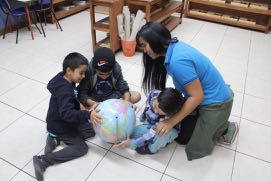
Costa Rica’s public childcare services are rapidly expanding to meet the growing needs of women, especially female heads of households who are undertaking night school and other educational programs, said the country’s nutrition and infant centers, called Dirección Nacional de Centros de Educación y Nutrición y de Centros Infantiles de Atención Integral, or CEN-CINAI, in Spanish.
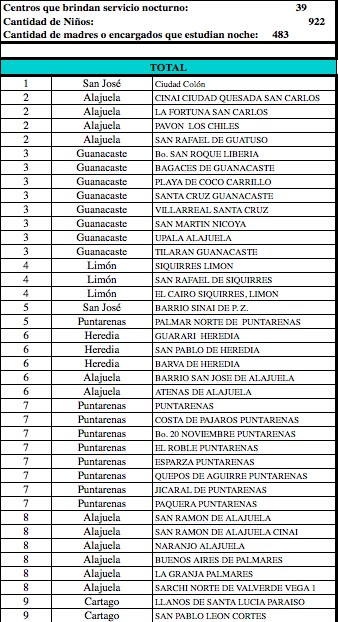
Since May 2016, the number of centers offering evening childcare which includes meals and age-appropriate activities has more than tripled, from a previous 12 centers to a current 39.
The service was implemented to aid mothers in finishing high school degrees or undertake technical training classes, most of which are only available in the evenings. The centers are located in many parts of the country, but are still unavailable to most of the population. In the graphic, a list of the locations can be found.
A total of 483 mothers who are in night classes currently have their children enrolled in one of the nutrition and childcare centers, for a total of 922 children participating throughout the country under the program which is run by the Ministry of Public Health.
Kimberly Mejia is 21-year-old single mother who lives in Guararí de Heredia and is a 10th grader the Carlos Meléndez Chaverri High School. Her 2-year-old son goes to an evening care center.
“My baby has been in the CINAI for one year and six months. If it were not for CINAI I would not be able to study, because I do not have anyone to help me. Here they treat the baby very well and that gives me peace of mind. He adapted very fast and likes to come here. I’m very relieved that here he is well taken care of and they love him very much, I have been noticing the changes in him and he is advancing with what they teach him here,” Mejía said.
For evening care, children arrive at five in the afternoon. They are welcomed and start with hygiene habits such as hand washing. At six they are given a nutritionally balanced dinner whose preparation is supervised by a nutritionist, said the Ministry of Health
Then they do quiet activities until around 8:30 p.m. when they receive a snack and then listen to stories, music, or color paint until their parents or mothers, for their return to the home.
The program is a huge boon to women struggling against great odds to improve their circumstances and lift themselves and their children out of poverty, said the ministry.



