


 SIGN UP FOR OUR
 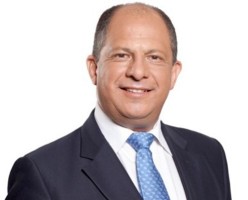 During a meeting that took place on Thursday morning, United Nations Secretary-General Ban Ki-moon announced the establishment of a High Level Panel for Women’s Economic Empowerment, which will be co-chaired by President Luis Guillermo Solis of Costa Rica and by Ms. Simona Scarpaleggia, CEO of IKEA Switzerland under the UN Women entity.
Economic empowerment is a something that the UN has undertaken since July 2010. UN Women is the short name for the United Nations Entity for Gender Equality and the Empowerment of Women. The creation of UN Women came about as part of the UN reform agenda, bringing together resources and mandates for greater impact. It merges and builds on the important work of four previously distinct parts of the UN system, which focused exclusively on gender equality and women’s empowerment.
With regard to economic empowerment, the UN sets a direct path towards gender equality, poverty eradication and inclusive economic growth. Women make enormous contributions to economies, whether in businesses, on farms, as entrepreneurs or employees, or by doing unpaid care work at home. But they also remain disproportionately affected by poverty, discrimination and exploitation.
Gender discrimination means women often end up in insecure, low-wage jobs, and constitute a small minority of those in senior positions. It curtails access to economic assets such as land and loans. It limits participation in shaping economic and social policies. And, because women perform the bulk of household work, they often have little time left to pursue economic opportunities.
UN Women supports women’s economic empowerment in line with various international conventions; to this effect, there is a growing body of evidence that shows that gender equality significantly contributes to advancing economies and sustainable development.
The UN Women program work with partners promote women’s ability to secure decent jobs, accumulate assets, and influence institutions and public policies determining growth and development. One critical area of focus involves advocacy to measure women’s unpaid care work, and to take actions so women and men can more readily combine it with paid employment.
UN Women reaches out to women who are most in need, often by engaging with grass-roots and civil society organizations. Particularly marginalized groups include rural women, domestic workers, some migrants and low-skilled women. The main objectives include: higher incomes, better access to and control over resources, and greater security, including protection from violence.
President Solis has mentioned that although women in Costa Rica enjoy the highest levels of equality and economic opportunity in Central America, more work needs to be done in this regard. He also believes that the time has come for a woman to become Secretary-General of the United Nations.



