


 SIGN UP FOR OUR
 By Wendy Anders
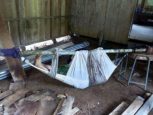
A hammock that was improvised to cart an indigenous woman in the Limón province by foot to be treated for appendicitis. She died from complications.
While tourists fly from around the world to San José, Costa Rica for top notch medical and dental services, entire towns in remote parts of the country still lack even the roads to reach the nearest under-staffed public health post.
The death of a 35-year-old Costa Rican indigenous woman from complications of appendicitis on Sunday may likely have been prevented if medical facilities had been more accessible, reported CRHoy yesterday.
A combination of lack of roads, stormy weather conditions, and lack of medical facilities in the remote Boyei region of Costa Rica’s Limón province proved deadly to Isel Payan.
Payan’s neighbors carried her in an improvised hammock over muddy trails for an agonizing twelve hours before reaching a road that was accessible by ambulance.
By the time she reached a medical center, the intervention was too late to be effective, reported CRHoy.com.
When she started feeling pain last Wednesday, rainy and windy weather conditions didn’t permit helicopters to land, so the decision was made to start walking.
Part of the difficulties en route to medical care were caused by a landslide that has been blocking the road between Grano de Oro and Turrialba, said Redondo.
Redondo told CRHoy.com he has been requesting the Ministry of Public Works and Transport (MOPT) to clear the road block for 6 months, but nothing has been done.
The woman managed to reach the hospital Thursday night, and died Sunday.
Mario Redondo, legislator from the Christian Democratic Alliance (CDA), said Payan’s death was the result of the neglect suffered by the country’s indigenous population.
“It is an injustice that this population has no access to transitable roads,” said the legislator.
“We think of indigenous and think it is all about collecting clothes (to help), but in reality we need a comprehensive policy regarding services for the indigenous population,” said the legislator to CRHoy.com.
The Grano de Oro health center, the nearest medical facility to Boyei, does not provide care after 4:00 p.m. due to a lack of staff, said Redondo.
Redondo is organizing a health brigade to provide medical and other health care in the area. Those who wish to contribute their services voluntarily to the effort may contact his office for more information. The Legislative Assembly main number is 2243-2000.



