


 SIGN UP FOR OUR
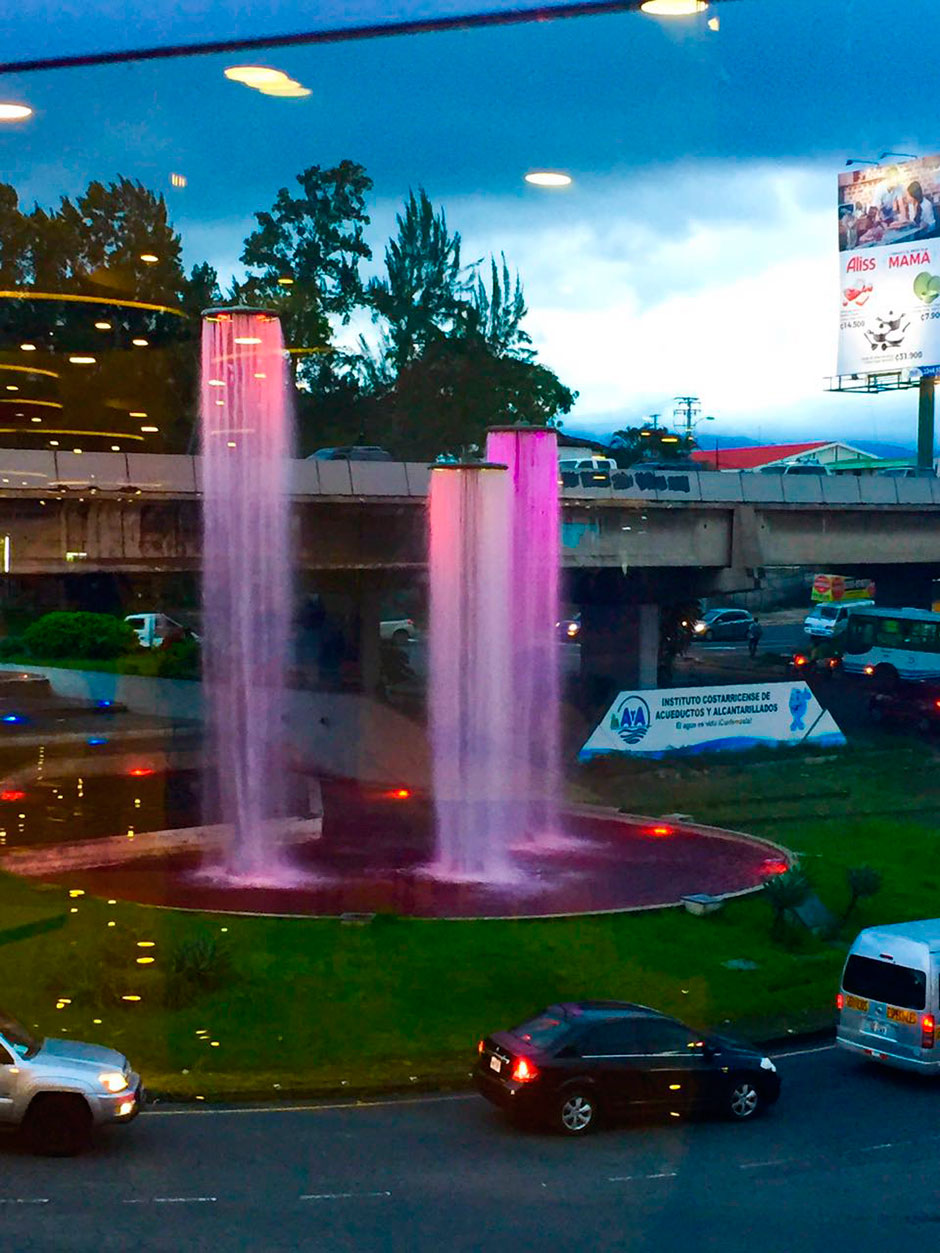
An as yet unidentified substance was used by an unidentified individual to color water in a large downtown San José, Costa Rica decorative fountain as a means of protest against environmental contamination, reported the Costa Rican digital news service Amelia Rueda this week.
The act was described on social media as a protest against pollution caused by pineapple production in Costa Rica.
The protester spoke on condition of anonymity with local Spanish language media to say he used, “a chemical dangerous to human health,” and added that “pineapples cover 43,000 hectares and cause irreversible damage to soils and water sources, not to mention aquifers.”
“The dye used is a chemical dangerous to health, but is not as dangerous as agrochemicals,” the subject said anonymously to a local newspaper.
The Costa Rican Institute of Aqueducts and Sewers (AyA) responded to the situation immediately and announced that no water for human consumption was contaminated by the ocurrence, as the fountain is not connected with drinking water supplies or pipes.
AmeliaRueda.com said they spoke by phone with Guillermo Vargas, known on social media as an eccentric artist and protestor called “Habacuc” and who linked himself to the action.
“He neither denied nor confirmed he was the author of the act,” said Amelia Rueda.
The “Fuente de la Hispanidad” or Hispanic Foundation is a large landmark at the eastern edge of downtown San José’s main thoroughfare, and is located at the roundabout the leads to San Pedro, Sabanilla and other eastern San José districts.
Samples of the red-tinted water were taken after the “poisoning” occurred Monday, August 14, and were sent to the AyA’s national water laboratory. Results are pending.
Based on the laboratory results, the AyA said they would determine how to move forward and whether to file a criminal suit and press for a criminal investigation of the act, according to Amelia Rueda and other local media reports.
Officials left the water in the fountain until the laboratory results indicate how dangerous the substance that was added to the water is, so they can determine the correct handling and disposal mechanisms to use.



